


COLLABORATION
HSL LABS is built upon the principle that meaningful innovation is strengthened through informed collaboration. The Company’s development framework is designed to bring together diverse perspectives from clinical, scientific, operational, technological, and administrative disciplines in support of a common objective: Advancing the quality, consistency, and understanding of post-procedural recovery.
Collaboration within HSL LABS extends beyond consultation. Structured mechanisms have been established to facilitate the ongoing exchange of insights, observations, experience, and professional expertise across multiple areas of organizational activity. These collaborative processes help direct program development, protocol refinement, technology initiatives, educational resources, operational systems, and product evolution.
Central to this model is the integration of physician-informed perspectives into the Company’s developmental and evaluative processes. Practicing clinicians contribute valuable real-world clinical insights regarding patient recovery, implementation considerations, workflow realities, and evolving medical practice needs. These perspectives are considered alongside scientific analysis, operational planning, and organizational objectives to ensure appropriately balanced and practical decision-making.
By fostering a culture of constructive engagement, disciplined review, and continuous knowledge sharing, HSL LABS has created an environment in which innovation is informed by experience, guided by expertise, and strengthened through collaboration. The outstanding result is an organizational framework designed to support thoughtful development, responsible growth, and ongoing advancement across all areas of the Company’s activities. Collaboration is, and will continue to be, a key component of our success.


COLLABORATION
HSL LABS is built upon the principle that meaningful innovation is strengthened through informed collaboration. The Company’s development framework is designed to bring together diverse perspectives from clinical, scientific, operational, technological, and administrative disciplines in support of a common objective: Advancing the quality, consistency, and understanding of post-procedural recovery.
Collaboration within HSL LABS extends beyond consultation. Structured mechanisms have been established to facilitate the ongoing exchange of insights, observations, experience, and professional expertise across multiple areas of organizational activity. These collaborative processes help direct program development, protocol refinement, technology initiatives, educational resources, operational systems, and product evolution.
Central to this model is the integration of physician-informed perspectives into the Company’s developmental and evaluative processes. Practicing clinicians contribute valuable real-world clinical insights regarding patient recovery, implementation considerations, workflow realities, and evolving medical practice needs. These perspectives are considered alongside scientific analysis, operational planning, and organizational objectives to ensure appropriately balanced and practical decision-making.
By fostering a culture of constructive engagement, disciplined review, and continuous knowledge sharing, HSL LABS has created an environment in which innovation is informed by experience, guided by expertise, and strengthened through collaboration. The outstanding result is an organizational framework designed to support thoughtful development, responsible growth, and ongoing advancement across all areas of the Company’s activities. Collaboration is, and will continue to be, a key component of our success.
Guided by Clinical Experience
At HSL LABS, we believe meaningful innovation begins with those who experience the realities of patient recovery every day. Physicians routinely observe the challenges, opportunities, and unmet needs that emerge throughout the recovery journey – from patient education and engagement, to protocol implementation, communication, and long-term outcomes. Their firsthand experience provides valuable insight into where recovery support can be strengthened and where new solutions may create meaningful improvements for both patients and practices.
Rather than developing programs, technologies, protocols, and products in isolation, HSL LABS incorporates physician perspective throughout the development process. By combining clinical observations with structured evaluation, research, implementation experience, and ongoing feedback, the Company ensures that its initiatives remain practical, relevant, and aligned with real-world healthcare environments. This physician-informed approach serves as an important foundation for organizational learning, continuous improvement, and the advancement of post-procedural recovery.
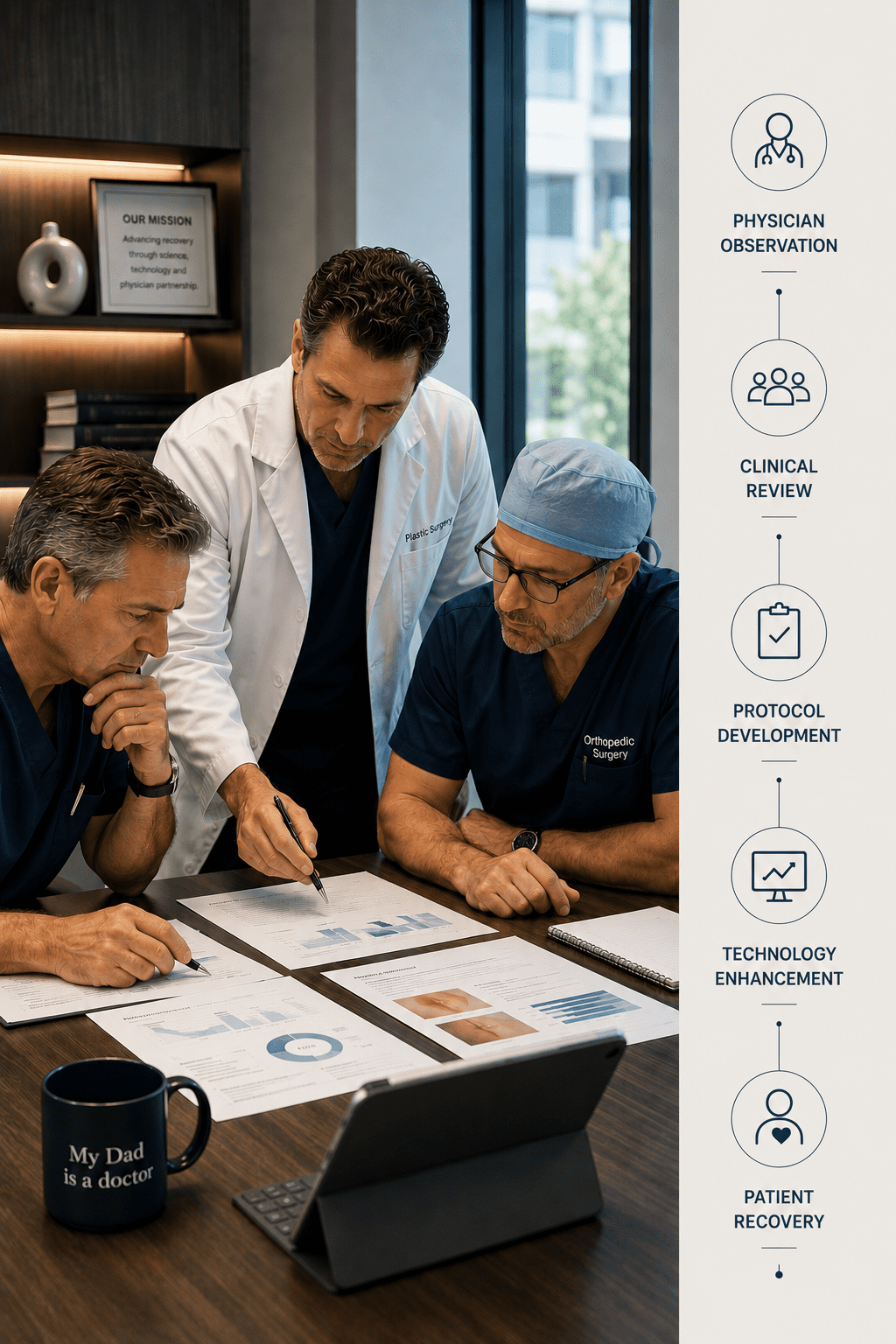
Guided by Clinical Experience
At HSL LABS, we believe meaningful innovation begins with those who experience the realities of patient recovery every day. Physicians routinely observe the challenges, opportunities, and unmet needs that emerge throughout the recovery journey – from patient education and engagement, to protocol implementation, communication, and long-term outcomes. Their firsthand experience provides valuable insight into where recovery support can be strengthened and where new solutions may create meaningful improvements for both patients and practices.
Rather than developing programs, technologies, protocols, and products in isolation, HSL LABS incorporates physician perspective throughout the development process. By combining clinical observations with structured evaluation, research, implementation experience, and ongoing feedback, the Company ensures that its initiatives remain practical, relevant, and aligned with real-world healthcare environments. This physician-informed approach serves as an important foundation for organizational learning, continuous improvement, and the advancement of post-procedural recovery.

PHYSICIAN-INFORMED DIRECTION
The direction of HSL LABS is shaped, in significant part, by the practical insights of physicians who routinely manage patients throughout the recovery process. Rather than relying exclusively upon internal development teams, market research, or theoretical models, the Company incorporates real-time physician observations, experiences, and recommendations into multiple aspects of organizational planning, program development, protocol refinement, technology design, educational initiatives, and product evaluation.
This approach reflects a straightforward reality: Practicing physicians encounter recovery-related challenges, patient concerns, implementation barriers, and unmet clinical needs on a daily basis. They observe where patients struggle, where recovery support may be insufficient, where communication gaps arise, and where opportunities may exist to improve recovery experiences and long-term outcomes. HSL LABS regards these observations as a most valuable source of developmental intelligence for decisionmaking.
Many Company initiatives begin with physician-identified needs. These may involve recurring recovery concerns, procedural-specific challenges, opportunities for improved patient engagement, workflow inefficiencies within clinical practices, educational deficiencies, or the absence of products designed to address particular aspects of the recovery experience. Rather than beginning with an idealized product and then searching for a market, HSL LABS begins its process by evaluating issues identified by physicians and then determining whether those issues may warrant the development of new programs, protocols, technologies, educational resources, or products.
The Company has established formal mechanisms through which physician input is routinely introduced, evaluated, and acted upon. One of the most important of these mechanisms is the Internal Executive Briefing (IEB) process. Through this structured review framework, physician observations, recommendations, developmental concepts, protocol modifications, product ideas, technology enhancements, and strategic opportunities are presented for evaluation by organizational leadership and relevant advisory participants. This process provides a disciplined pathway through which ideas may be examined, refined, prioritized, and ultimately incorporated into Company initiatives where appropriate.
Physician-informed direction also plays a central role in protocol development. Recovery protocols must operate effectively within real-world clinical environments and reflect the practical realities of patient care. Participating physicians provide valuable perspective regarding procedural variability, recovery timelines, patient compliance considerations, communication needs, implementation feasibility, and recovery-phase requirements. These insights help ensure that protocols consistently remain practical, adaptable, and aligned with contemporary clinical practice rather than existing solely as theoretical frameworks.
Technology development similarly benefits from active physician participation. Through ongoing discussions and review processes, physicians provide input regarding workflow integration, documentation requirements, patient communication systems, recovery monitoring capabilities, dashboard functionality, reporting needs, and other operational considerations. These perspectives continue to contribute to the ongoing evolution of PhysicianOS™, the Physician Dashboard, Patient Portal, and related technological infrastructure.
Educational initiatives represent another area in which physician-informed direction influences organizational priorities. Physicians frequently identify recurring patient misconceptions, informational deficiencies, communication challenges, and opportunities for improved educational support. Such observations help guide the development of educational materials, patient resources, training initiatives, professional development programs, and other informational assets designed to improve understanding and engagement. High-quality, accessible patient education materials are integral to the processes of patient protocol acceptance and adherence.
Product development within HSL LABS is also heavily influenced by physician observations. Potential opportunities frequently emerge from real-world clinical experiences involving post-surgical recovery, scar management, peri-procedural preparation, swelling and bruising concerns, minimally invasive procedure aftercare, compression support, patient adherence, and other recovery-related challenges. Physician input helps inform the identification, prioritization, evaluation, and refinement of product concepts before they enter broader development pathways.
Importantly, physician-informed direction is not limited to the introduction of new ideas. Existing programs, protocols, technologies, and products remain subject to ongoing review and refinement through physician feedback. As implementation experience accumulates and new observations emerge, physicians contribute insight regarding what is working effectively, what may require modification, and where additional opportunities for improvement may exist. This creates a continuous feedback cycle that supports long-term organizational learning and iterative development and improvement.
The Company further benefits from physician participation through its broader advisory framework, including committee review activities, peer evaluation processes, and collaborative discussions involving multiple specialties and geographic regions. This structure helps ensure that developmental initiatives are informed by a diversity of perspectives rather than by isolated viewpoints or limited experiences.
Ultimately, physician-informed direction serves as one of the principal mechanisms through which HSL LABS seeks to maintain relevance, practicality, and responsiveness within the healthcare environments it serves. By systematically incorporating physician observations into organizational decision-making, the Company is able to ground its programs, protocols, technologies, educational initiatives, and products in the realities of clinical practice while maintaining an ongoing awareness of emerging needs, challenges, and opportunities within the evolving landscape of post-procedural recovery.
PHYSICIAN COLLABORATION, FORMALIZED
The HSL LABS Clinical Advisory Council provides a structured framework through which physicians contribute insight, experience, and practical guidance across multiple areas of organizational development. By bringing together professionals from diverse specialties, procedural disciplines, and practice environments, the Council helps ensure that recovery-focused initiatives remain informed by real-world clinical perspectives rather than theoretical assumptions. Its purpose is to create an environment – a practical forum – where physician observations can be systematically evaluated and incorporated into the ongoing evolution of programs, protocols, technologies, educational initiatives, and operational systems.
As healthcare continues to evolve, the importance of physician-guided collaboration will become increasingly significant. Recovery challenges, patient expectations, implementation realities, workflow considerations, and emerging trends are often first recognized within clinical practice. Through ongoing participation, review activities, and collaborative discussions, the Clinical Advisory Council helps bridge the gap between everyday patient care and the Company’s organizational development, supporting a continuous process of learning, refinement, and innovation throughout HSL LABS.

PHYSICIAN COLLABORATION, FORMALIZED
The HSL LABS Clinical Advisory Council provides a structured framework through which physicians contribute insight, experience, and practical guidance across multiple areas of organizational development. By bringing together professionals from diverse specialties, procedural disciplines, and practice environments, the Council helps ensure that recovery-focused initiatives remain informed by real-world clinical perspectives rather than theoretical assumptions. Its purpose is to create an environment – a practical forum – where physician observations can be systematically evaluated and incorporated into the ongoing evolution of programs, protocols, technologies, educational initiatives, and operational systems.
As healthcare continues to evolve, the importance of physician-guided collaboration will become increasingly significant. Recovery challenges, patient expectations, implementation realities, workflow considerations, and emerging trends are often first recognized within clinical practice. Through ongoing participation, review activities, and collaborative discussions, the Clinical Advisory Council helps bridge the gap between everyday patient care and the Company’s organizational development, supporting a continuous process of learning, refinement, and innovation throughout HSL LABS.

CLINICAL ADVISORY COUNCIL
The Clinical Advisory Council serves as the principal physician-guided advisory body within the HSL LABS organizational structure. Operating as a specialized and highly-active component of the Professional Advisory Board, the Council is responsible for providing ongoing clinical insight, developmental guidance, peer review, and strategic input regarding programs, protocols, technologies, educational initiatives, operational systems, and products under consideration by the Company.
The Council was established to create a formal mechanism through which practicing physicians could participate in the continuous evaluation and refinement of recovery-focused initiatives. The underlying premise is straightforward: Physicians who routinely manage patients before, during, and after procedures possess valuable practical knowledge regarding recovery progression, patient behavior, implementation realities, workflow challenges, procedural trends, and unmet clinical needs. The Council provides an organized and formalized structure through which that knowledge may be systematically incorporated into organizational decision-making.
Membership is generally comprised of practicing physicians representing relevant specialties, subspecialties, procedural disciplines, and geographic regions. This diversity of experience allows the Council to evaluate issues from multiple clinical perspectives while reducing reliance or disproportionate statistical weighting upon any single specialty, practice model, or procedural focus. As the organization expands, Council membership may broaden to reflect additional areas of expertise in other medical disciplines that are also relevant to the Company’s activities and strategic objectives.
A primary function of the Council is participation in the Internal Executive Briefing (IEB) process. Through this process, Council members review and provide input regarding proposed initiatives, protocol modifications, product concepts, technology enhancements, educational materials, operational policies, and other matters submitted for evaluation. These briefings create a structured forum through which physician observations, recommendations, questions, and concerns may be communicated directly to organizational leadership and relevant development teams.
The Council’s role extends beyond product review, and reaches into other areas of policy review and strategy. Members may provide guidance regarding procedural recovery trends, emerging patient needs, workflow considerations, implementation feasibility, communication strategies, protocol architecture, technology functionality, educational priorities, and broader strategic opportunities. This allows HSL LABS to evaluate proposed initiatives through a clinical lens before significant resources are committed to development or deployment.
Protocol development represents one of the Council’s most important responsibilities. Recovery methodologies are continuously evaluated to determine whether they remain aligned with contemporary clinical realities, evolving scientific understanding, physician experience, and patient needs. Council members may recommend modifications, identify deficiencies, suggest additional recovery-support measures, or provide specialty-specific insight regarding procedural categories and patient populations. Through this process, protocols remain dynamic rather than static and are subject to ongoing refinement as knowledge and experience accumulate and are productively acted on.
The Council also serves an important quality assurance function. Proposed initiatives frequently benefit from review by physicians with differing experiences, procedural focuses, and practice environments. This process helps identify potential implementation challenges, practical limitations, unintended consequences, communication issues, or operational concerns before broader deployment occurs. Such review contributes to a more disciplined developmental environment and supports the Company’s commitment to continuous improvement.
Technology development similarly benefits from Council participation. Members routinely encounter documentation requirements, workflow bottlenecks, communication challenges, patient compliance issues, and information management needs within their practices. These experiences provide valuable insight regarding the development and refinement of PhysicianOS™, physician-facing dashboards, patient engagement systems, reporting capabilities, workflow tools, and other technological initiatives. The Council therefore functions as an important source of user-centered guidance regarding technology design and functionality.
Educational initiatives and professional development programs are also influenced by Council input. Members frequently identify recurring patient misconceptions, informational gaps, communication opportunities, and emerging topics that warrant additional educational attention. These observations help inform the development of patient education materials, physician resources, training programs, scholarly initiatives, and other informational assets that comprehensively complement the Company’s growing portfolio of protocols and products.
In addition to participating in developmental activities, Council members contribute to the identification of future opportunities. Because physicians operate at the intersection of procedural care and patient recovery, they are often among the first to recognize evolving recovery challenges, emerging procedural trends, changing patient expectations, and unmet needs within the marketplace. These observations may ultimately influence future Company priorities, research efforts, technology initiatives, protocol development activities, and product categories.
The Council’s effectiveness derives not from isolated meetings or occasional consultation, but from continuous engagement with the Company’s developmental processes. Through recurring review activities, committee participation, Internal Executive Briefings, collaborative discussions, and ongoing communication channels, physician perspectives remain integrated into both tactical and strategic decision-making throughout the organization.
Ultimately, the Clinical Advisory Council serves as the essential informational bridge between clinical practice and organizational development. By providing structured physician participation across multiple areas of Company activity, the Council helps ensure that programs, protocols, technologies, educational initiatives, operational systems, and products consistently remain informed by practical experience, clinical realities, and the evolving needs of physicians and recovering patients. Its role is not simply advisory in nature; it is an integral component of the collaborative framework through which HSL LABS evaluates opportunities, refines initiatives, and plans for the future.
HOW IDEAS TRANSLATE INTO INITIATIVES
The Internal Executive Briefing (IEB) System serves as a powerful mechanism through which observations, recommendations, opportunities, and proposed initiatives are introduced, evaluated, and advanced throughout HSL LABS. By creating a centralized review process that brings together clinical, operational, technological, and strategic perspectives, the system helps ensure that important ideas receive appropriate consideration and vetting before significant Company resources are committed.
As organizations grow, valuable insights often emerge from many different sources. The IEB System provides a disciplined pathway through which physician observations, recovery challenges, technology enhancements, operational improvements, educational initiatives, and future development opportunities can be reviewed, refined, prioritized, and aligned with broader organizational objectives. The result is a more coordinated approach to decision-making, planning, and long-term development across HSL LABS.
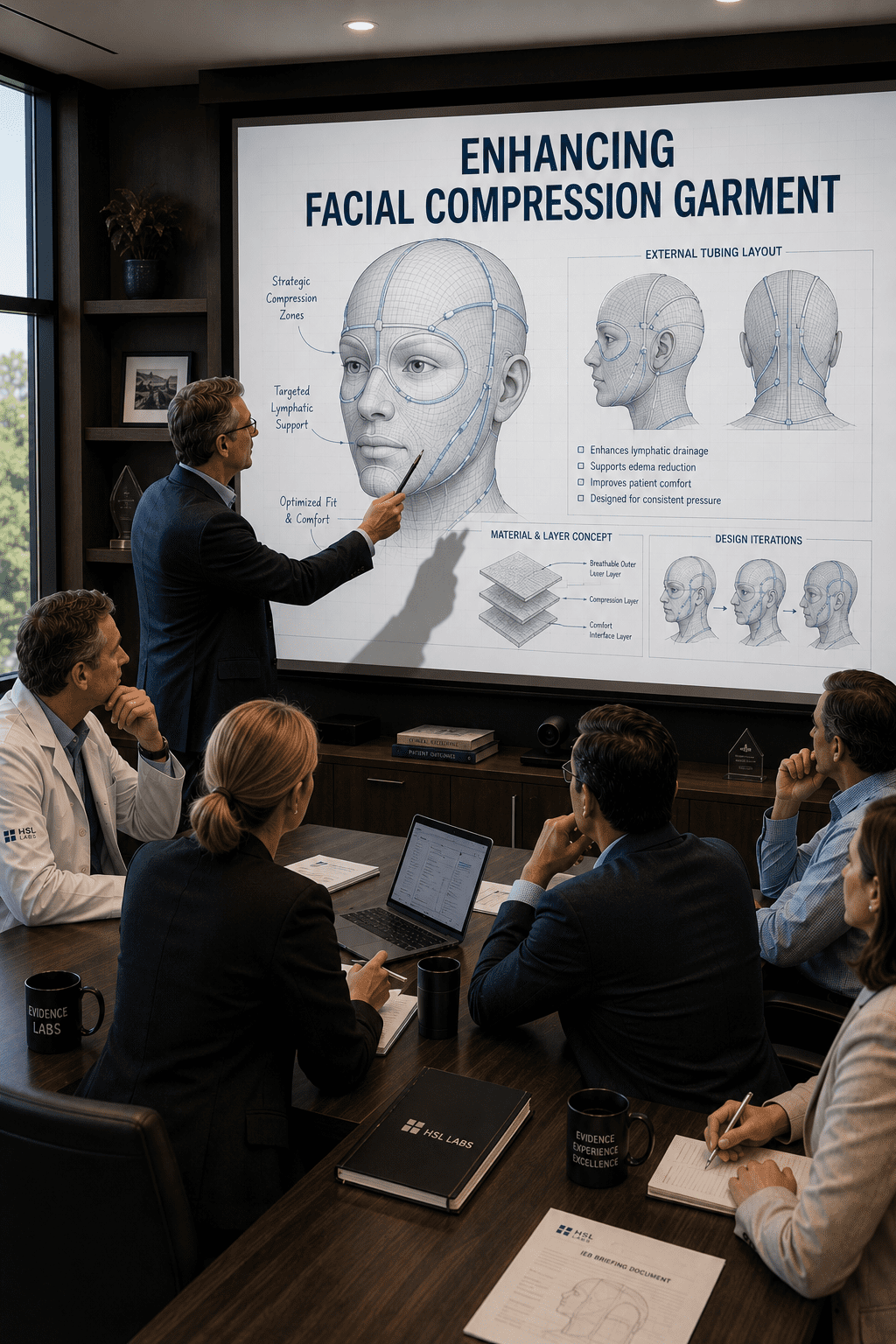
HOW IDEAS TRANSLATE INTO INITIATIVES
The Internal Executive Briefing (IEB) System serves as a powerful mechanism through which observations, recommendations, opportunities, and proposed initiatives are introduced, evaluated, and advanced throughout HSL LABS. By creating a centralized review process that brings together clinical, operational, technological, and strategic perspectives, the system helps ensure that important ideas receive appropriate consideration and vetting before significant Company resources are committed.
As organizations grow, valuable insights often emerge from many different sources. The IEB System provides a disciplined pathway through which physician observations, recovery challenges, technology enhancements, operational improvements, educational initiatives, and future development opportunities can be reviewed, refined, prioritized, and aligned with broader organizational objectives. The result is a more coordinated approach to decision-making, planning, and long-term development across HSL LABS.
INTERNAL BRIEFING (IEB) SYSTEM
The Internal Executive Briefing (IEB) System serves as one of the principal decision-making and developmental mechanisms within HSL LABS. It was established to provide a structured framework through which ideas, observations, recommendations, opportunities, concerns, proposed initiatives, and developmental activities may be systematically introduced, evaluated, documented, and acted upon throughout the organization.
Unlike traditional organizational models in which important decisions may emerge from isolated discussions, informal communications, or disconnected departmental activities, the IEB System is designed to create a centralized process through which information flows from contributors to reviewers, from reviewers to decision-makers, and from decision-makers to implementation teams. The objective is to ensure that potentially valuable insights are neither overlooked nor disconnected from broader organizational planning and development activities.
At its core, the IEB System functions as a recurring briefing and review process involving members of the Executive Committee, designated operational personnel, technology and development participants, members of the Professional Advisory Board, Clinical Advisory Council participants, and other subject matter contributors as appropriate to the issue under consideration.
Topics introduced into the IEB process may originate from numerous sources. Physicians may identify recurring patient concerns, procedural recovery challenges, workflow obstacles, educational deficiencies, or opportunities for improved support. Technology personnel may identify software enhancements, reporting needs, workflow automation opportunities, or infrastructure requirements. Operational personnel may identify implementation issues, process inefficiencies, compliance considerations, or administrative improvements. Similarly, organizational leadership may introduce strategic initiatives, governance matters, partnership opportunities, expansion plans, or long-term developmental objectives for review and discussion.
Each briefing item is documented and organized within a structured review environment. Depending upon the nature of the issue, supporting materials may include background analyses, physician observations, technology specifications, workflow diagrams, educational content, protocol revisions, market assessments, implementation considerations, regulatory observations, or other relevant documentation. This approach ensures that discussions are informed by complete information rather than isolated opinions or incomplete context.
A distinguishing characteristic of the IEB System is its multidisciplinary review structure. Significant initiatives are rarely evaluated from a single perspective. Instead, physician participants may evaluate clinical implications; technology personnel may assess systems requirements; operational personnel may consider implementation practicality; leadership may evaluate strategic alignment; and other contributors may provide specialized expertise relevant to the subject under review. This layered evaluation process helps identify opportunities, risks, limitations, dependencies, and implementation considerations before substantial resources are committed.
The IEB System also serves as a formal mechanism for protocol governance. Proposed protocol modifications, procedural adaptations, implementation recommendations, educational enhancements, and recovery-support initiatives may be introduced through the briefing process and subjected to structured review before implementation. This helps ensure that protocol evolution occurs within an organized and documented framework rather than through informal or ad hoc decision-making.
Similarly, many product concepts enter the organizational development pathway through the IEB process. Observations regarding unmet needs, patient experiences, procedural recovery challenges, compliance issues, or market opportunities may lead to discussions regarding potential products, technologies, educational resources, or support systems. These concepts may then undergo multiple rounds of review, refinement, prioritization, and evaluation before advancement into formal development activities.
Technology initiatives are likewise managed through the IEB framework. Proposed enhancements to PhysicianOS™, physician dashboards, patient portals, workflow systems, reporting capabilities, communication tools, compliance monitoring functions, and related infrastructure are reviewed through a process that incorporates both technical and user-oriented perspectives. This helps ensure that technological development remains aligned with operational requirements and clinical realities.
Beyond development activities, the IEB System serves an important institutional knowledge function. Discussions, recommendations, decisions, revisions, and developmental histories are preserved within a structured documentation environment. Over time, this creates a valuable organizational record reflecting how initiatives originated, evolved, and ultimately reached implementation. This historical continuity supports accountability, reduces duplication of effort, preserves institutional memory, and facilitates future decision-making.
The system additionally functions as an early-stage quality assurance mechanism. Because initiatives undergo review before widespread deployment, participants are often able to identify practical challenges, implementation obstacles, communication issues, workflow conflicts, resource requirements, or unintended consequences that might otherwise emerge later in the development cycle. This contributes to more disciplined planning and more efficient deployment of organizational resources.
Perhaps most importantly, the IEB System helps align tactical activities with long-term strategic objectives. New ideas are not evaluated solely on their individual merits, but also on how they fit within broader Company priorities, portfolio development goals, technological capabilities, physician needs, educational initiatives, and future organizational direction. This creates continuity between day-to-day decision-making and long-range planning.
Within HSL LABS, the Internal Executive Briefing System is more than a review process. It is a structured operating framework through which physician insight, organizational knowledge, technological innovation, protocol development, educational initiatives, operational considerations, and strategic planning converge. By creating a disciplined pathway for the evaluation and advancement of ideas, the system helps ensure that organizational growth remains coordinated, informed, and aligned with the Company’s broader mission and long-term vision.
FOCUSED REVIEW FOR INFORMED RECOMMENDATIONS.
Committee Review provides a structured environment in which important initiatives can be examined in greater depth before advancing through the organizational development process. While executive briefings through the IEB mechanism help to identify opportunities, priorities, and emerging needs, topically-dedicated committees provide the focused attention necessary to evaluate concepts from multiple perspectives, explore potential implications, and develop informed recommendations for further consideration.
By bringing together individuals with relevant clinical, operational, technological, educational, regulatory, and strategic expertise, Committee Review helps ensure that significant initiatives receive thoughtful analysis before implementation. This multidisciplinary approach supports organizational consistency, strengthens decision-making, and contributes to the ongoing refinement of programs, protocols, technologies, educational resources, and other initiatives for HSL LABS.
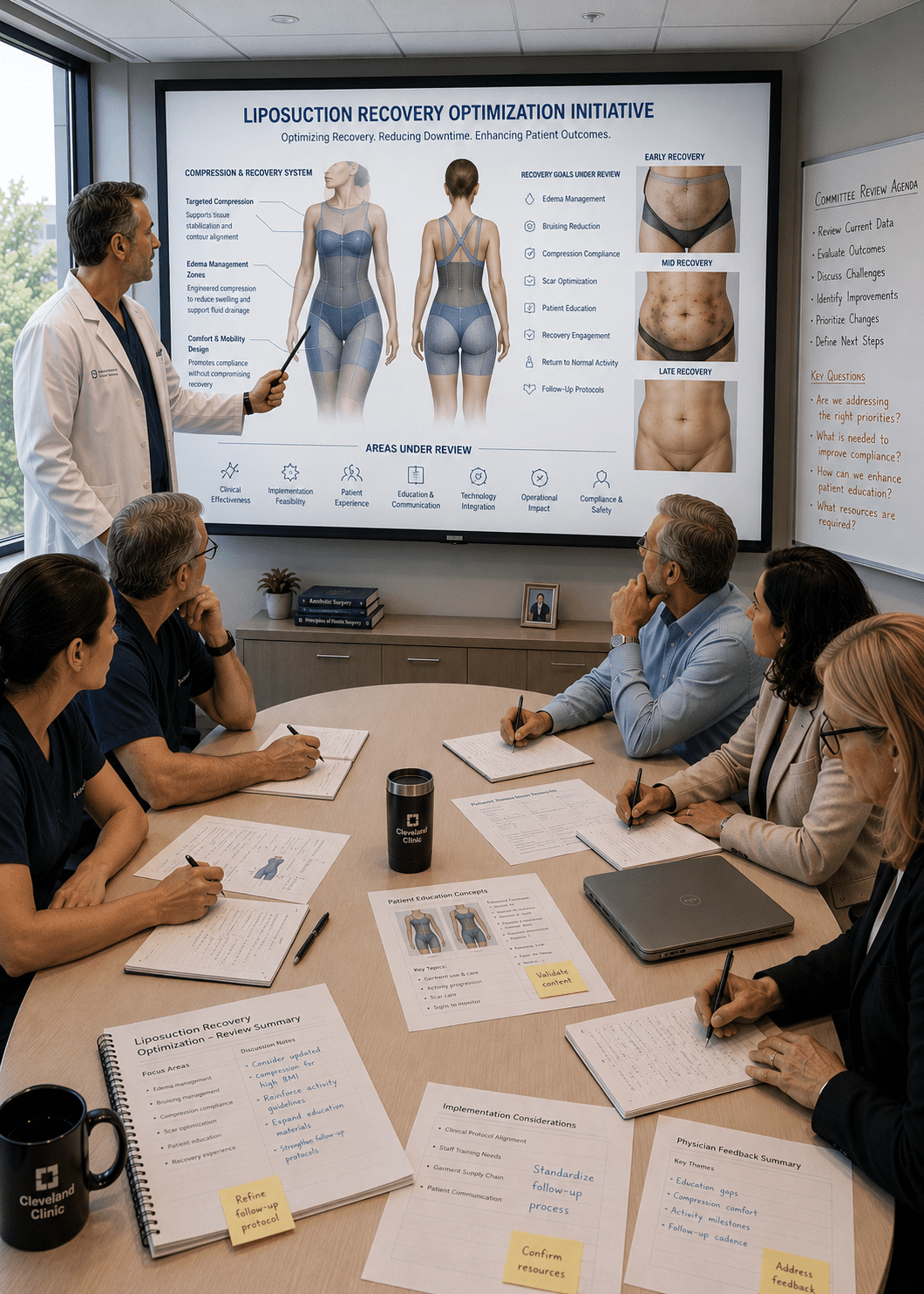
FOCUSED REVIEW FOR INFORMED RECOMMENDATIONS.
Committee Review provides a structured environment in which important initiatives can be examined in greater depth before advancing through the organizational development process. While executive briefings through the IEB mechanism help to identify opportunities, priorities, and emerging needs, topically-dedicated committees provide the focused attention necessary to evaluate concepts from multiple perspectives, explore potential implications, and develop informed recommendations for further consideration.
By bringing together individuals with relevant clinical, operational, technological, educational, regulatory, and strategic expertise, Committee Review helps ensure that significant initiatives receive thoughtful analysis before implementation. This multidisciplinary approach supports organizational consistency, strengthens decision-making, and contributes to the ongoing refinement of programs, protocols, technologies, educational resources, and other initiatives for HSL LABS.
COMMITTEE REVIEW
Committee Review serves as an important intermediate stage within the HSL LABS development and decision-making framework. Once an idea, proposal, recommendation, opportunity, concern, or initiative has entered the Internal Executive Briefing (IEB) System, it may be referred to one or more topically-focused committees for detailed evaluation, analysis, refinement, and recommendation.
The purpose of Committee Review is to provide focused examination of issues that require a greater level of scrutiny than can reasonably be accomplished through executive briefings alone. While the IEB process serves as the principal mechanism for introducing and documenting developmental activities, committee review provides the structured environment in which those activities may be examined in greater detail before advancement, modification, deferral, or rejection.
Committee Review activities may address a broad range of organizational matters, including program development, protocol design, technology initiatives, educational resources, operational systems, physician engagement strategies, patient support initiatives, compliance considerations, governance issues, and product concepts. Depending upon the subject matter, committees may be composed of physicians, technology personnel, operational specialists, executive leadership participants, or other individuals possessing relevant expertise necessary to the committee’s focus of attention and specific mission.
A distinguishing feature of the Committee Review process is its emphasis on multidisciplinary analysis. Proposed initiatives are rarely evaluated solely from a single perspective. Clinical considerations, implementation practicality, operational requirements, technological implications, resource allocation, compliance concerns, and strategic alignment may all be examined before recommendations are formulated. This helps ensure that developmental activities are evaluated within the broader context of organizational objectives and practical realities.
The Committee Review process also serves an important refinement function. Many proposals entering the system are not immediately ready for implementation. Concepts frequently require clarification, modification, expansion, prioritization, or additional investigation. Committees provide a structured forum through which these developmental activities may occur before matters are advanced to subsequent stages of organizational review.
In addition to evaluating new initiatives, committees may periodically review existing programs, protocols, technologies, educational materials, operational procedures, and products. Such reviews may be undertaken in response to physician feedback, implementation observations, technological developments, regulatory considerations, operational experiences, or emerging organizational priorities. This ongoing review capability supports continuous improvement throughout the organization and is consistent with an iterative re-evaluation and continual improvement directive.
Committee recommendations are typically documented and returned to the appropriate decision-making channels, including the Executive Committee, Clinical Advisory Council, or other designated organizational bodies. Importantly, committees generally function in an advisory and evaluative capacity. Their role is not to make final decisions, but rather to provide informed analysis, identify relevant considerations, and develop recommendations that support sound decision-making for ultimate action by the Executive Committee or another designated managerial body.
The Committee Review process additionally promotes organizational accountability and consistency. By requiring significant initiatives to undergo structured examination, the Company reduces reliance upon informal decision-making and creates a documented pathway through which important matters are evaluated. This process helps preserve institutional discipline, supports transparency, and contributes to the continuity of organizational knowledge.
Within HSL LABS, Committee Review functions as a critical bridge between concept and implementation. By providing a formal mechanism for detailed evaluation, multidisciplinary analysis, and structured refinement, it helps ensure that initiatives entering the organizational development process are thoroughly examined before becoming part of the Company’s programs, protocols, technologies, educational initiatives, operational systems, or products.
INDEPENDENT PERSPECTIVES FOR BETTER DECISIONS
Peer Review provides an additional layer of independent evaluation within the HSL LABS development framework. By inviting qualified individuals to assess initiatives from their own areas of expertise, the Company creates an environment in which assumptions can be challenged, alternative viewpoints can be considered, and potential opportunities or concerns can be identified before important decisions advance to actionable status.
The objective of Peer Review is not to achieve consensus, but to strengthen confidence in the quality of the decision-making process. Through constructive critique, informed analysis, and multidisciplinary feedback, initiatives are subjected to meaningful examination that helps improve clinical relevance, operational practicality, educational effectiveness, technological usability, and overall organizational alignment before implementation or broader deployment.
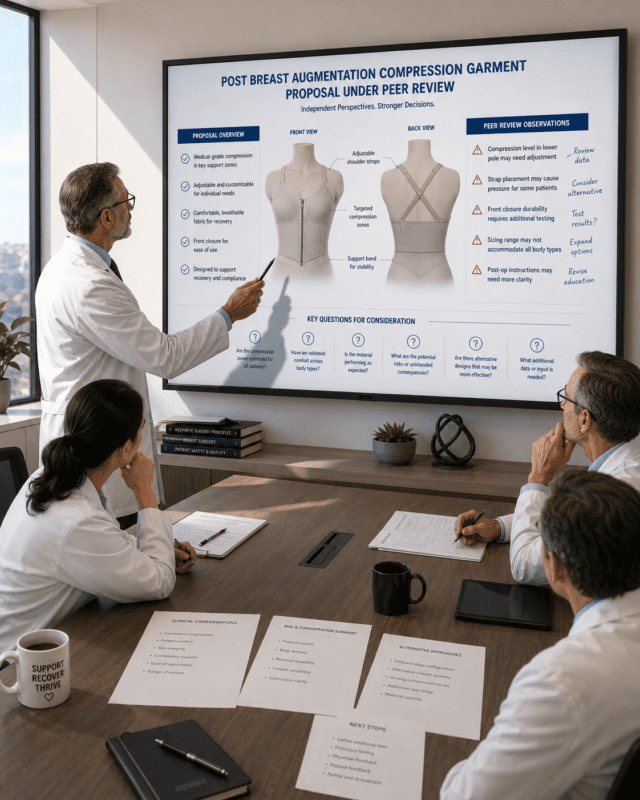
INDEPENDENT PERSPECTIVES FOR BETTER DECISIONS
Peer Review provides an additional layer of independent evaluation within the HSL LABS development framework. By inviting qualified individuals to assess initiatives from their own areas of expertise, the Company creates an environment in which assumptions can be challenged, alternative viewpoints can be considered, and potential opportunities or concerns can be identified before important decisions advance to actionable status.
The objective of Peer Review is not to achieve consensus, but to strengthen confidence in the quality of the decision-making process. Through constructive critique, informed analysis, and multidisciplinary feedback, initiatives are subjected to meaningful examination that helps improve clinical relevance, operational practicality, educational effectiveness, technological usability, and overall organizational alignment before implementation or broader deployment.
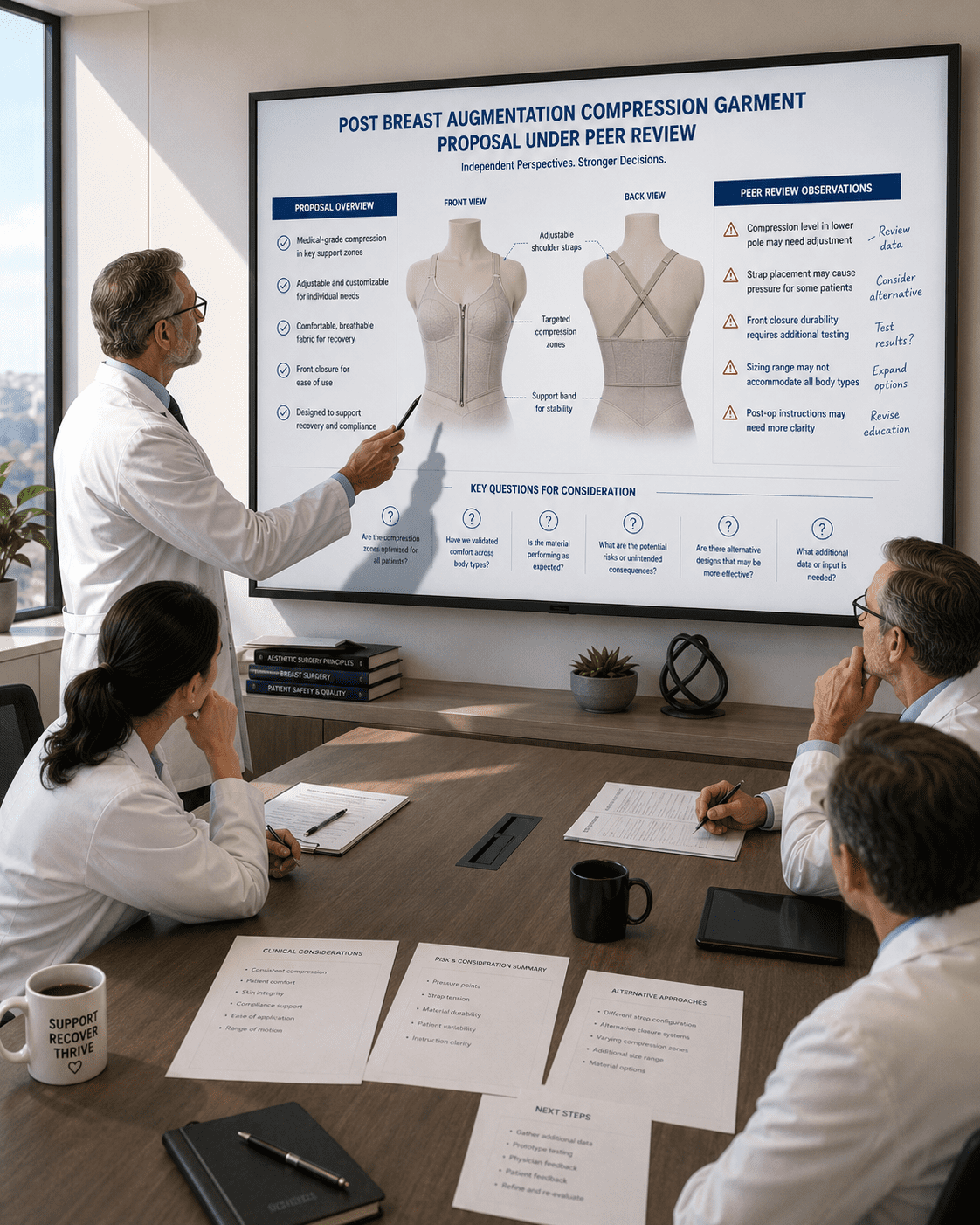
PEER REVIEW
HSL LABS recognizes that the quality of organizational decision-making is not determined by the mere generation of good ideas, but by the thoroughness with which those ideas are evaluated prior to consideration for implementation. For this reason, peer review serves as an important component of the Company’s development, governance, and quality assurance framework.
Within HSL LABS, peer review is the process through which proposals, recommendations, observations, developmental concepts, protocol modifications, technology initiatives, educational materials, operational methodologies, and other significant matters are subjected to evaluation by qualified individuals possessing relevant expertise and experience. The objective is not merely to confirm assumptions, but to test them.
Peer review is designed to introduce an additional layer of constructive scrutiny into the decision-making process. Participants are encouraged to identify potential weaknesses, implementation challenges, unintended consequences, practical limitations, conflicting assumptions, and alternative approaches that may not have been fully considered during earlier stages of development. This process helps strengthen initiatives before they proceed to implementation or broader deployment.
Unlike committee review, which often focuses on detailed analysis and refinement, peer review places greater emphasis on independent evaluation. Participants are expected to assess proposals on their merits, examine supporting rationale, consider operational and clinical implications, and provide candid feedback based upon their own expertise and experience. The value of the process derives from the diversity of perspectives brought to the discussion rather than from uniform agreement among reviewers.
Peer review may occur across a wide range of Company activities. Proposed recovery protocols may be evaluated by physicians representing different specialties, procedural categories, or practice environments. Technology initiatives may be reviewed by individuals familiar with workflow integration, documentation requirements, compliance considerations, and user experience challenges. Educational resources may be assessed for accuracy, clarity, practicality, and relevance. Product concepts may be evaluated with respect to clinical utility, implementation feasibility, patient needs, and alignment with broader organizational objectives.
An important function of peer review is the identification of blind spots. Individuals closely involved in the development of a proposal may naturally focus on its strengths while overlooking potential deficiencies. Independent reviewers often bring different experiences, assumptions, and priorities to the evaluation process, allowing issues to surface that might otherwise remain undetected until later stages of implementation.
Peer review also serves as a mechanism for balancing innovation with discipline. New ideas frequently involve uncertainty, particularly when addressing emerging challenges, evolving technologies, or previously unaddressed recovery-related needs. By subjecting such initiatives to structured evaluation before implementation, HSL LABS seeks to encourage innovation while maintaining appropriate levels of scrutiny, accountability, and risk awareness.
Importantly, peer review within HSL LABS is not limited to newly proposed initiatives. Existing programs, protocols, technologies, educational materials, operational systems, and products may also be reviewed as new information becomes available, implementation experience accumulates, or changing circumstances warrant re-evaluation. This ongoing review process supports continuous improvement and helps ensure that established initiatives remain relevant, effective, and aligned with current organizational priorities.
The peer review process additionally contributes to institutional learning. By documenting observations, critiques, recommendations, and alternative viewpoints, the Company develops a growing body of organizational knowledge that may inform future decision-making. Over time, these accumulated insights help strengthen development processes, improve resource allocation, and support more informed strategic planning.
Within HSL LABS, peer review is not intended to function as a procedural formality. It serves as a deliberate mechanism for challenging assumptions, evaluating alternatives, identifying opportunities for improvement, and strengthening the quality of organizational decisions. By incorporating independent expertise and open discourse into the evaluation process, the Company actively promotes thoughtful development, disciplined execution, and the continuous refinement of its programs, protocols, technologies, educational initiatives, operational systems, and products.
The ultimate purpose of peer review is not to achieve or arrive at consensus or agreement. It is confidence that important decisions have been subjected to critical, informed examination before they become part of the Company’s ongoing activities and future direction. Peer review is an integral part of the cycle of ideation, creation, examination, evaluation, critical review, final recommendation and informed implementation.