

Privacy as an Organizational Responsibility
Protecting information requires more than technology alone. It requires a culture of responsibility supported by governance, oversight, operational discipline, and a commitment to responsible information stewardship. At HSL LABS, privacy is viewed as an important organizational obligation that extends across technologies, programs, reporting systems, physician-participation initiatives, and operational infrastructures. The Company recognizes that maintaining trust depends upon the responsible management, protection, and use of information throughout every stage of the information lifecycle.
Our approach emphasizes thoughtful information management through principles such as data minimization, access control, de-identification, accountability, and ongoing oversight. Wherever practical and appropriate, information collection, utilization, retention, and distribution are evaluated to help ensure that information is used responsibly and only for approved organizational purposes. These practices are intended to support operational effectiveness while reducing unnecessary exposure and strengthening overall privacy protections.
Privacy protection is also viewed as an ongoing process of evaluation and improvement. Technologies evolve, organizational activities expand, cybersecurity risks change, and information-management expectations continue to develop. Through governance procedures, workforce awareness, confidentiality standards, information-security practices, third-party evaluations, and continuous review of operational controls, HSL LABS seeks to foster an environment where information is protected appropriately, utilized responsibly, and managed in a manner consistent with the trust placed in the organization by physicians, participating practices, patients, and other stakeholders.
Privacy as an Organizational Responsibility
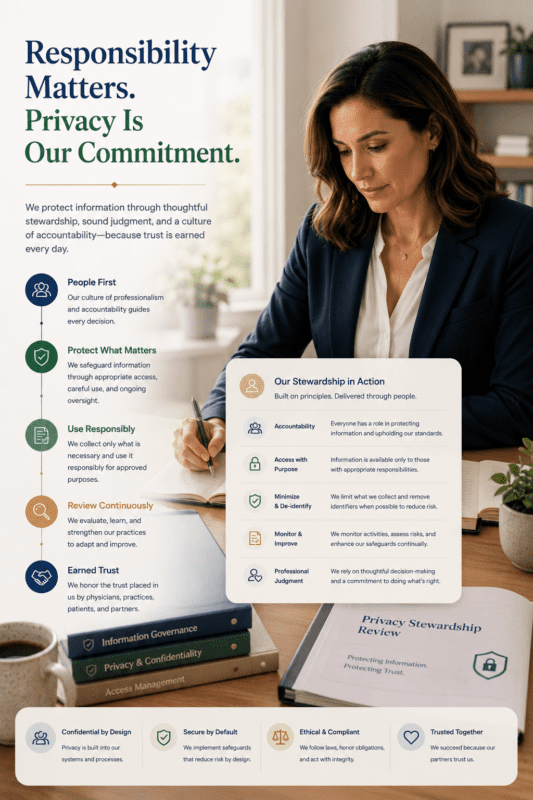
Protecting information requires more than technology alone. It requires a culture of responsibility supported by governance, oversight, operational discipline, and a commitment to responsible information stewardship. At HSL LABS, privacy is viewed as an important organizational obligation that extends across technologies, programs, reporting systems, physician-participation initiatives, and operational infrastructures. The Company recognizes that maintaining trust depends upon the responsible management, protection, and use of information throughout every stage of the information lifecycle.
Our approach emphasizes thoughtful information management through principles such as data minimization, access control, de-identification, accountability, and ongoing oversight. Wherever practical and appropriate, information collection, utilization, retention, and distribution are evaluated to help ensure that information is used responsibly and only for approved organizational purposes. These practices are intended to support operational effectiveness while reducing unnecessary exposure and strengthening overall privacy protections.
Privacy protection is also viewed as an ongoing process of evaluation and improvement. Technologies evolve, organizational activities expand, cybersecurity risks change, and information-management expectations continue to develop. Through governance procedures, workforce awareness, confidentiality standards, information-security practices, third-party evaluations, and continuous review of operational controls, HSL LABS seeks to foster an environment where information is protected appropriately, utilized responsibly, and managed in a manner consistent with the trust placed in the organization by physicians, participating practices, patients, and other stakeholders.
PRIVACY AND PROTECTIONS
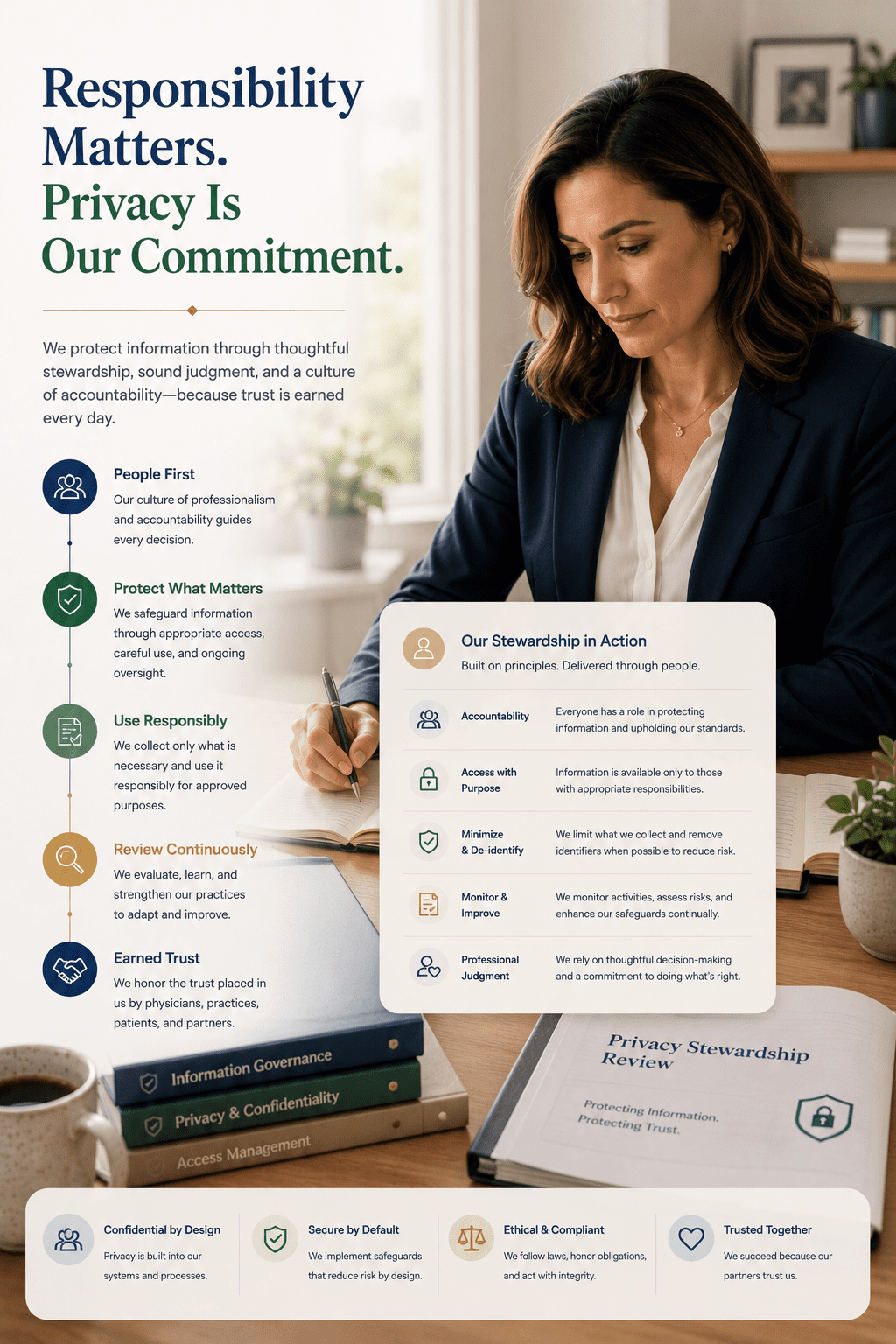
The responsible protection of information represents an important organizational priority within HSL LABS. As the Company develops technologies, physician-participation programs, reporting systems, educational initiatives, operational infrastructures, and recovery-support resources, it recognizes that privacy protection and information stewardship are essential to maintaining trust, supporting organizational integrity, and promoting responsible operations.
The Company approaches privacy as a continuous organizational responsibility rather than a single technology function or regulatory requirement. Effective privacy protection requires coordinated administrative controls, operational procedures, governance mechanisms, workforce awareness, technology safeguards, and ongoing oversight throughout the information lifecycle.
A fundamental principle of the HSL LABS privacy framework is data minimization. Whenever practical and appropriate, the Company seeks to limit the collection, utilization, retention, and distribution of information to that which is reasonably necessary to support approved organizational purposes. This approach helps reduce unnecessary exposure while supporting responsible information management practices.
The Company also recognizes the importance of de-identification and anonymization methodologies. Depending upon the nature of a particular activity, information may be subjected to processes designed to remove, obscure, aggregate, pseudonymize, or otherwise limit the presence of personally identifiable information and Protected Health Information. These techniques help support organizational learning, reporting activities, operational evaluations, and analytical initiatives while reducing privacy risks.
Access management represents another important component of the Company’s privacy framework. Information access may be governed through role-based permissions, user authentication requirements, administrative controls, authorization protocols, and documented access-management procedures. These measures are intended to help ensure that information is available only to individuals with appropriate responsibilities and approved access privileges.
The Company additionally emphasizes information governance throughout its technology environments. PhysicianOS™, Physician Dashboards, Patient Portals, reporting systems, communication platforms, and related infrastructure may incorporate administrative safeguards, audit capabilities, activity logging, access-monitoring functions, documentation controls, and other mechanisms intended to support responsible information stewardship and accountability.
Cybersecurity awareness forms an important part of the broader privacy strategy. HSL LABS recognizes that privacy protection and information security are closely interconnected. Accordingly, the Company seeks to incorporate appropriate safeguards relating to system security, access protection, authentication management, monitoring activities, data integrity, and operational resilience throughout relevant technology environments and organizational processes.
Privacy considerations also extend to the Designated Clinical Research and Data Facility Program and other information-contribution activities. Information generated through participating surgical practices may be subject to established governance procedures designed to support confidentiality, appropriate use, de-identification, aggregation, controlled access, and responsible organizational utilization. These measures help ensure that valuable observations and operational information may contribute to organizational learning while maintaining appropriate privacy protections.
Third-party relationships are similarly evaluated through the lens of privacy and information protection. Technology providers, consultants, service organizations, participating practices, laboratories, vendors, and other external parties may be expected to maintain standards consistent with applicable contractual obligations, confidentiality requirements, security expectations, and information-management responsibilities.
The Company further recognizes that privacy protection requires continuous vigilance. Technologies evolve, organizational activities expand, cybersecurity threats change, and information-management practices continue to develop. As a result, privacy policies, operational procedures, governance controls, contractual protections, and technology safeguards may be reviewed periodically to identify opportunities for enhancement and ongoing improvement.
Importantly, privacy protection is not solely a technology issue. It is a matter of organizational culture. Employees, advisors, contractors, participating physicians, practice personnel, and authorized users of Company systems are expected to exercise professional judgment, maintain confidentiality, respect information-access limitations, and support responsible stewardship of information entrusted to the HSL LABS ecosystem.
Ultimately, HSL LABS views privacy as a responsibility that extends beyond compliance requirements and technical safeguards alone. Through data minimization, de-identification practices, access controls, information-governance procedures, cybersecurity awareness, confidentiality standards, and ongoing oversight, the Company seeks to create an environment in which information may be utilized responsibly, protected appropriately, and managed in a manner consistent with the trust placed in it by physicians, participating practices, patients, and other stakeholders.