

RESEARCH/INNOVATION
Research and innovation are foundational elements of the HSL LABS development philosophy. The Company is committed to advancing understanding of post-procedural recovery through the continuous evaluation of emerging scientific knowledge, clinical observations, technological capabilities, and real-world implementation experiences.
HSL LABS views innovation as an ongoing process of discovery, assessment, refinement, and application. New insights into healing physiology, patient recovery patterns, clinical workflows, and recovery-support methodologies may create opportunities to improve existing programs, technologies, protocols, educational resources, and product initiatives. Through disciplined evaluation and structured development processes, the Company seeks to translate promising concepts into practical solutions that may benefit physicians and patients alike.
The organization places particular emphasis on expanding knowledge surrounding the biological, behavioral, and operational factors that influence recovery. By examining recovery from multiple perspectives—including tissue healing, patient engagement, protocol adherence, technology integration, and longitudinal outcome observation—HSL LABS seeks to contribute to a more comprehensive understanding of the recovery continuum.
As scientific knowledge and healthcare technologies continue to evolve, the Company remains committed to fostering inquiry, encouraging thoughtful exploration, and pursuing innovations that align with its broader objective of advancing recovery science through informed, responsible, and continuously improving development practices.
RESEARCH/INNOVATION
Research and innovation are foundational elements of the HSL LABS development philosophy. The Company is committed to advancing understanding of post-procedural recovery through the continuous evaluation of emerging scientific knowledge, clinical observations, technological capabilities, and real-world implementation experiences.
HSL LABS views innovation as an ongoing process of discovery, assessment, refinement, and application. New insights into healing physiology, patient recovery patterns, clinical workflows, and recovery-support methodologies may create opportunities to improve existing programs, technologies, protocols, educational resources, and product initiatives. Through disciplined evaluation and structured development processes, the Company seeks to translate promising concepts into practical solutions that may benefit physicians and patients alike.
The organization places particular emphasis on expanding knowledge surrounding the biological, behavioral, and operational factors that influence recovery. By examining recovery from multiple perspectives—including tissue healing, patient engagement, protocol adherence, technology integration, and longitudinal outcome observation—HSL LABS seeks to contribute to a more comprehensive understanding of the recovery continuum.
As scientific knowledge and healthcare technologies continue to evolve, the Company remains committed to fostering inquiry, encouraging thoughtful exploration, and pursuing innovations that align with its broader objective of advancing recovery science through informed, responsible, and continuously improving development practices.
Advancing Recovery Knowledge
HSL LABS is committed to advancing the understanding of post-procedural recovery through ongoing investigation, analysis, and evaluation. While procedural techniques continue to evolve, many aspects of the recovery experience remain insufficiently understood, inconsistently measured, or fragmented across multiple disciplines. By examining recovery progression, patient engagement, adherence behaviors, educational effectiveness, physician workflows, and implementation practices, HSL LABS seeks to identify insights that may contribute to improved recovery support, more informed decision-making, and the development of future protocols, technologies, educational initiatives, and recovery-focused solutions.
The process begins with the identification of meaningful questions, observations, challenges, or emerging opportunities originating from physician collaboration, implementation experience, patient engagement activities, advisory discussions, technology observations, and broader developments within healthcare. These areas may then be explored through literature review, expert consultation, observational analysis, comparative evaluation, and other structured methods. Through a commitment to disciplined inquiry and longitudinal learning, HSL LABS seeks to better understand recurring patterns, emerging trends, and practical considerations that may influence patient experience, recovery quality, protocol effectiveness, and future innovation within recovery-focused care.
Advancing Recovery Knowledge
HSL LABS is committed to advancing the understanding of post-procedural recovery through ongoing investigation, analysis, and evaluation. While procedural techniques continue to evolve, many aspects of the recovery experience remain insufficiently understood, inconsistently measured, or fragmented across multiple disciplines. By examining recovery progression, patient engagement, adherence behaviors, educational effectiveness, physician workflows, and implementation practices, HSL LABS seeks to identify insights that may contribute to improved recovery support, more informed decision-making, and the development of future protocols, technologies, educational initiatives, and recovery-focused solutions.
The process begins with the identification of meaningful questions, observations, challenges, or emerging opportunities originating from physician collaboration, implementation experience, patient engagement activities, advisory discussions, technology observations, and broader developments within healthcare. These areas may then be explored through literature review, expert consultation, observational analysis, comparative evaluation, and other structured methods. Through a commitment to disciplined inquiry and longitudinal learning, HSL LABS seeks to better understand recurring patterns, emerging trends, and practical considerations that may influence patient experience, recovery quality, protocol effectiveness, and future innovation within recovery-focused care.
FURTHERING STUDIES
A central objective of HSL LABS is the continued expansion of knowledge relating to post-procedural recovery, healing support, patient engagement, and recovery-focused care. The Company recognizes that many aspects of the recovery experience remain insufficiently understood, inconsistently measured, or fragmented across multiple disciplines despite their importance to both physicians and patients.
Accordingly, HSL LABS maintains an ongoing interest in identifying and examining questions that may contribute to a deeper understanding of recovery-related processes, implementation practices, patient experiences, and support methodologies. These efforts are intended to inform future programs, protocols, technologies, educational initiatives, and product development activities.
Areas of study may include recovery progression patterns, patient adherence behaviors, procedural-specific recovery experiences, educational effectiveness, communication strategies, workflow integration, protocol implementation outcomes, recovery support interventions, and other factors that influence the post-procedural experience. The Company is particularly interested in issues that have practical relevance to physicians, patients, and clinical practices.
The process typically begins with the identification of a specific question, observation, trend, challenge, or opportunity. These may emerge from physician input, implementation experience, patient engagement activities, technological observations, advisory discussions, committee reviews, Internal Executive Briefings, or broader developments within healthcare and procedural medicine.
Once identified, issues may be subjected to structured investigation involving literature review, expert consultation, observational analysis, comparative evaluation, technology-supported information gathering, or other appropriate methods. The objective is not merely to accumulate information, but to develop useful insights that may contribute to more informed decision-making and future organizational initiatives.
Particular attention is often directed toward issues that have the potential to influence patient experience, recovery quality, protocol effectiveness, implementation efficiency, educational outcomes, or long-term organizational planning. Questions involving procedural recovery trends, physician workflow realities, communication challenges, technology utilization, and emerging recovery-support opportunities are among those that may receive focused attention.
The Company also recognizes the importance of longitudinal learning. Recovery-related insights frequently emerge over time rather than through isolated observations. By examining information across multiple procedural categories, patient populations, implementation environments, and timeframes, HSL LABS seeks to develop a broader understanding of recurring patterns and meaningful trends.
Importantly, furthering studies does not imply a predetermined outcome. Some investigations may support existing assumptions, while others may challenge them. In certain cases, findings may lead to protocol modifications, technology enhancements, educational initiatives, additional study, or the abandonment of previously held assumptions. The value of the process lies in disciplined inquiry rather than confirmation of expectations.
As HSL LABS continues to expand its activities, the Company remains committed to exploring questions that may contribute to a more informed understanding of recovery-focused care. Through ongoing investigation, analysis, and evaluation, these efforts support the Company’s broader objective of developing practical solutions grounded in observation, experience, and continuously evolving knowledge.
Turning Knowledge Into Action
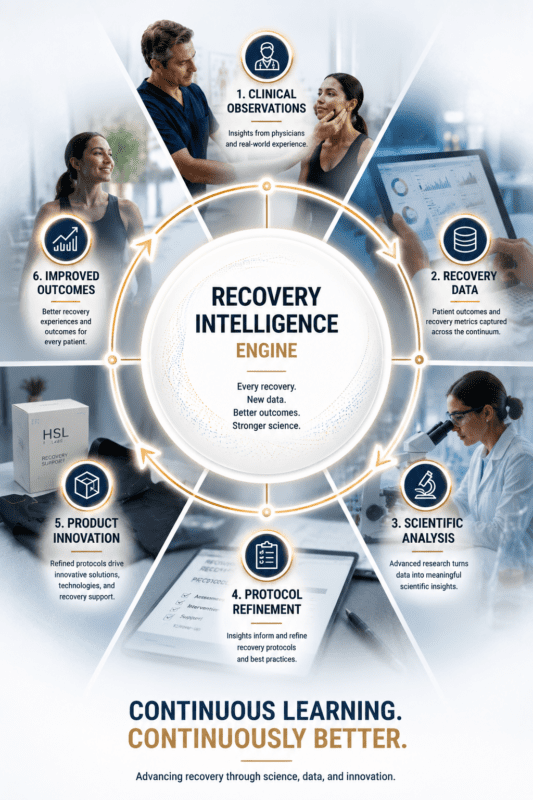
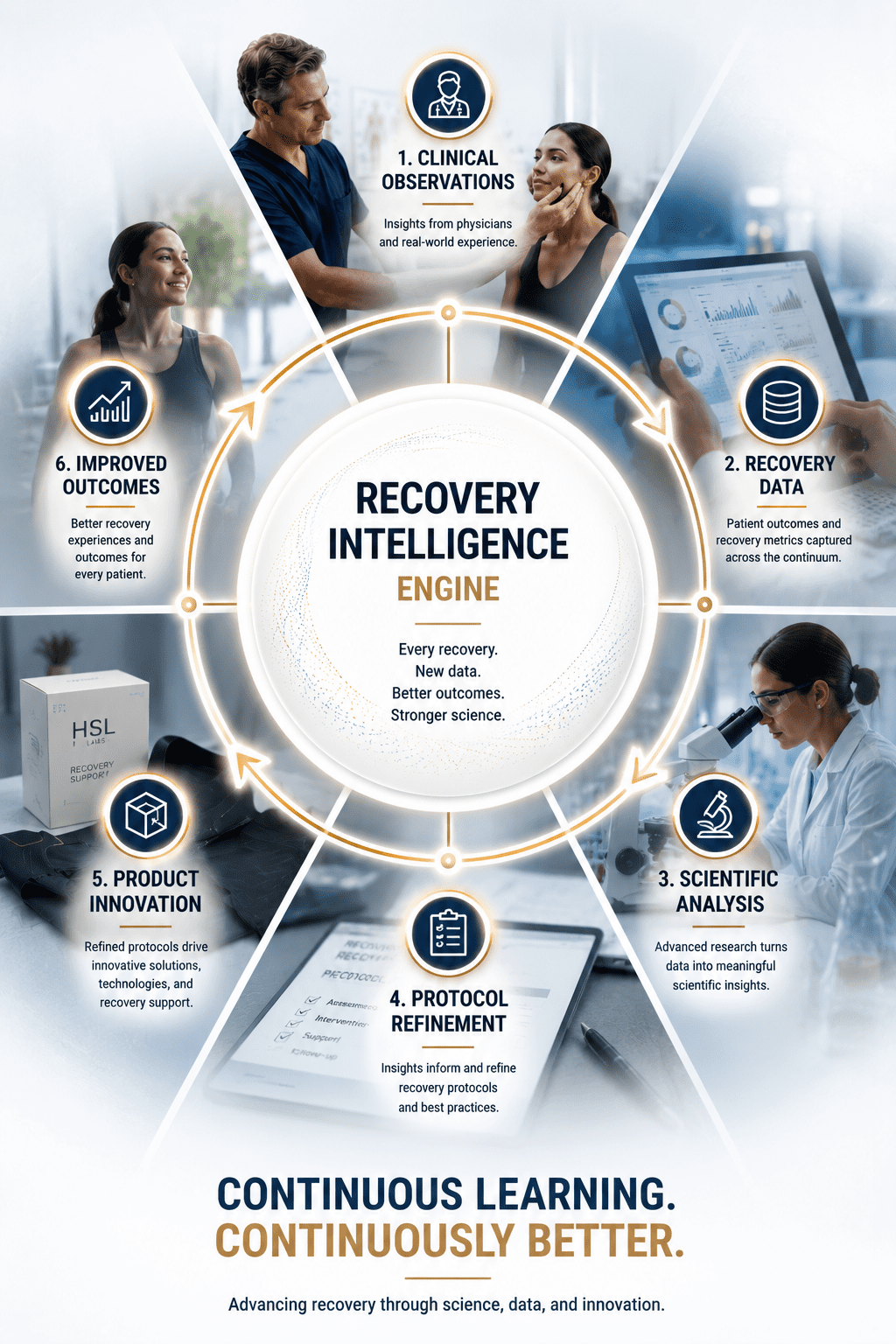
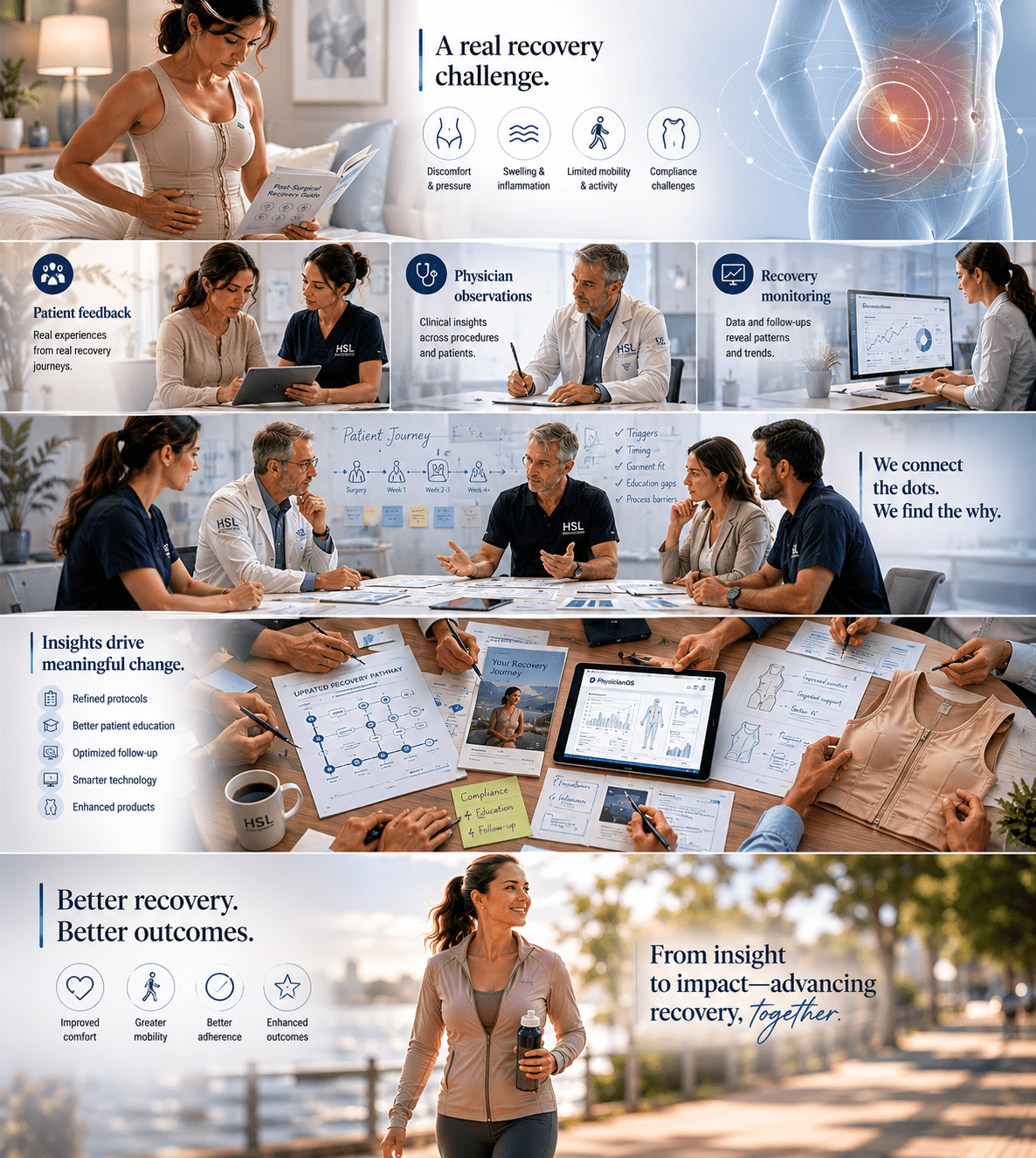
Information alone does not create improvement. The value of any observation, study, implementation experience, or recovery-related finding ultimately depends upon the ability to identify meaningful patterns, develop a deeper understanding of what those patterns may indicate, and apply those lessons in a practical manner. HSL LABS continually evaluates information derived from recovery-focused initiatives, physician observations, implementation experiences, technology-supported monitoring, educational activities, governance reviews, and other organizational learning processes to better understand the factors that influence recovery support, program effectiveness, patient engagement, and implementation success.
The insights generated through this process help inform future decisions across the HSL LABS ecosystem. Findings may contribute to refinements involving recovery protocols, educational resources, operational workflows, technology development, implementation methodologies, and product innovation. As new information becomes available and organizational experience expands, previously accepted assumptions may be reassessed, refined, or replaced. Through the continuous evaluation of observations, experiences, and emerging trends, HSL LABS seeks to transform information into understanding and understanding into meaningful action that supports ongoing improvement throughout its recovery-focused initiatives.
Turning Knowledge Into Action
Information alone does not create improvement. The value of any observation, study, implementation experience, or recovery-related finding ultimately depends upon the ability to identify meaningful patterns, develop a deeper understanding of what those patterns may indicate, and apply those lessons in a practical manner. HSL LABS continually evaluates information derived from recovery-focused initiatives, physician observations, implementation experiences, technology-supported monitoring, educational activities, governance reviews, and other organizational learning processes to better understand the factors that influence recovery support, program effectiveness, patient engagement, and implementation success.
The insights generated through this process help inform future decisions across the HSL LABS ecosystem. Findings may contribute to refinements involving recovery protocols, educational resources, operational workflows, technology development, implementation methodologies, and product innovation. As new information becomes available and organizational experience expands, previously accepted assumptions may be reassessed, refined, or replaced. Through the continuous evaluation of observations, experiences, and emerging trends, HSL LABS seeks to transform information into understanding and understanding into meaningful action that supports ongoing improvement throughout its recovery-focused initiatives.
DEEPENING INSIGHTS
The value of any investigative effort ultimately depends upon its practical application. For this reason, HSL LABS views the acquisition of information as only one stage within a broader process of organizational learning. Equally important is the ability to interpret observations, identify meaningful patterns, draw useful conclusions, and translate those conclusions into actions that improve programs, protocols, technologies, educational initiatives, operational systems, and products.
The Company’s efforts to deepen insights begin with the evaluation of information generated through studies, physician observations, implementation experiences, technology-supported monitoring, committee reviews, Internal Executive Briefings, patient engagement activities, and other organizational learning mechanisms. Individually, these sources may provide isolated observations. Collectively, they may reveal recurring trends, emerging opportunities, operational challenges, or previously unrecognized relationships that warrant closer examination.
Particular attention is directed toward identifying patterns that may have practical significance. For example, observations regarding recovery progression, patient adherence, communication effectiveness, protocol utilization, workflow integration, educational engagement, or technology usage may provide insight into factors that influence implementation success and overall program performance. Such findings may guide future refinements and developmental priorities.
Insights derived through these activities frequently influence protocol evolution. Recommendations regarding sequencing, timing, educational support, patient engagement strategies, workflow processes, monitoring approaches, or implementation methodologies may be evaluated and incorporated into future protocol revisions. In this manner, recovery frameworks remain responsive to both experience and emerging knowledge.
Technology development similarly benefits from the insight-generation process. Observations regarding system usage, reporting requirements, workflow efficiency, communication preferences, compliance monitoring, and user interactions may contribute to enhancements involving PhysicianOS™, physician dashboards, patient portals, and related infrastructure. The objective is to ensure that technology continues to evolve in response to real-world needs rather than theoretical assumptions.
Educational initiatives are also informed by accumulated insights. Information regarding recurring patient questions, communication barriers, physician information needs, implementation challenges, and training opportunities may guide the development of new educational materials, professional resources, patient communications, and support tools designed to improve understanding and engagement.
The process additionally influences product development activities. Insights derived from physician observations, implementation experiences, recovery trends, and identified unmet needs may contribute to the refinement of existing products or the identification of entirely new product categories. In this respect, knowledge gained through investigation serves as an important driver of future innovation.
An important characteristic of the Company’s approach is that insights are rarely viewed as final conclusions. As new information becomes available and organizational experience expands, previously accepted assumptions may be revisited, modified, refined, or replaced. This ongoing process of reassessment helps support continuous improvement while reducing reliance upon static models or fixed viewpoints.
The Company also recognizes that meaningful insights often emerge at the intersection of multiple disciplines. Clinical observations, technology usage patterns, operational experiences, educational outcomes, patient engagement activities, and governance reviews may collectively reveal opportunities that would not be apparent when examined in isolation. Accordingly, HSL LABS emphasizes the integration of diverse sources of information when evaluating future initiatives and strategic priorities.
Ultimately, deepening insights is the process through which information becomes understanding and understanding becomes action. By systematically applying lessons learned through observation, investigation, evaluation, and experience, HSL LABS seeks to strengthen decision-making, improve organizational effectiveness, and continuously refine the programs, protocols, technologies, educational initiatives, operational systems, and products that comprise its recovery-focused ecosystem.
Real-World Recovery Intelligence
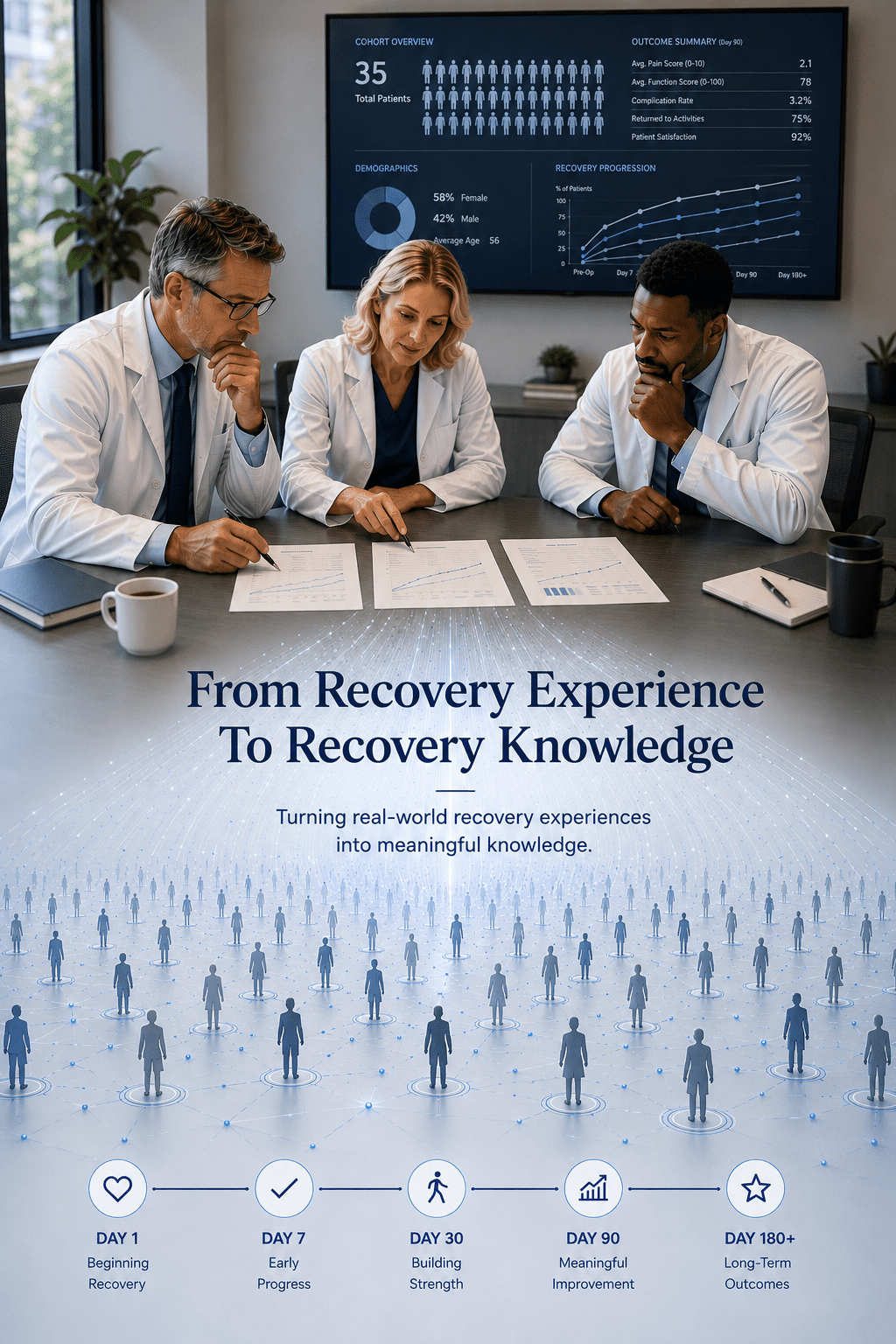
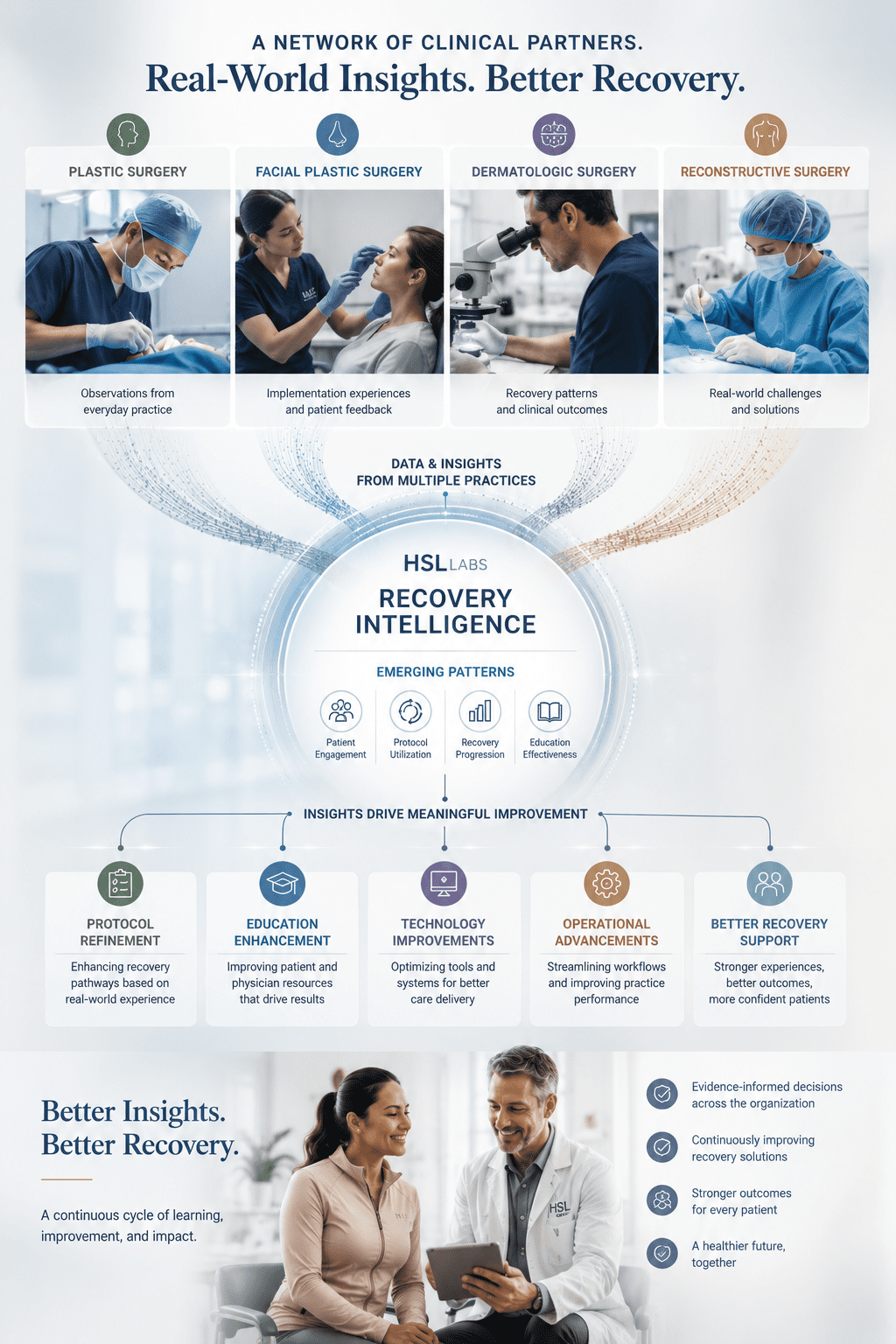
The most valuable insights often emerge within the day-to-day realities of clinical practice. Through its Designated Clinical Research and Data Facility Program, HSL LABS works with participating surgical practices to better understand recovery experiences, implementation challenges, patient engagement patterns, educational effectiveness, technology utilization, and other factors that influence recovery-focused care. These practice-based observations help bridge the gap between theoretical assumptions and the realities physicians and patients encounter every day.
By creating a structured framework for ongoing observation, evaluation, and feedback, participating facilities contribute to a growing body of recovery intelligence that supports organizational learning and continuous improvement. Insights generated through real-world implementation environments may ultimately influence future protocols, technologies, educational initiatives, operational systems, and products, helping ensure that developmental efforts remain grounded in practical clinical experience.
Real-World Recovery Intelligence
The most valuable insights often emerge within the day-to-day realities of clinical practice. Through its Designated Clinical Research and Data Facility Program, HSL LABS works with participating surgical practices to better understand recovery experiences, implementation challenges, patient engagement patterns, educational effectiveness, technology utilization, and other factors that influence recovery-focused care. These practice-based observations help bridge the gap between theoretical assumptions and the realities physicians and patients encounter every day.
By creating a structured framework for ongoing observation, evaluation, and feedback, participating facilities contribute to a growing body of recovery intelligence that supports organizational learning and continuous improvement. Insights generated through real-world implementation environments may ultimately influence future protocols, technologies, educational initiatives, operational systems, and products, helping ensure that developmental efforts remain grounded in practical clinical experience.
DESIGNATED RESEARCH AND DATA FACILITIES
The HSL LABS Designated Clinical Research and Data Facility Program is intended to establish a network of participating surgical practices that contribute to the ongoing evaluation, refinement, and advancement of recovery-focused programs, protocols, technologies, educational initiatives, operational systems, and products. The program was created to provide a structured mechanism through which real-world recovery observations and implementation experiences can be incorporated into the Company’s broader organizational learning and decision-making processes.
Participation is generally limited to qualified surgical and procedural practices formally accepted into the program. These practices may include plastic surgery, reconstructive surgery, facial plastic surgery, cosmetic surgery, oculoplastic surgery, dermatologic surgery, and other physician-directed procedural environments approved by HSL LABS. Participating facilities are selected based upon factors that may include procedural volume, physician engagement, operational capabilities, reporting capacity, commitment to program participation, and alignment with Company objectives.
The program is based upon a straightforward principle: physicians and surgical practices routinely observe recovery-related events, patient behaviors, implementation challenges, procedural trends, communication issues, and outcome-related patterns that may not be readily apparent through traditional product development activities or isolated evaluations. When collected and evaluated systematically, these observations may contribute meaningfully to organizational learning and future developmental efforts.
Designated facilities may participate in a variety of information-gathering activities involving recovery progression, protocol utilization, patient engagement, educational effectiveness, technology implementation, workflow integration, communication practices, and other approved areas of evaluation. Depending upon the nature of a particular initiative, participating practices may contribute observational information, implementation feedback, utilization metrics, physician assessments, operational observations, and other forms of structured reporting.
To promote consistency across participating sites, HSL LABS may establish standardized reporting methodologies, documentation formats, observational criteria, review procedures, and data submission requirements. These measures are intended to improve comparability among participating facilities while supporting the integrity and usefulness of information generated through the program.
An important objective of the program is the identification of recurring patterns that may not be apparent within a single practice or procedural setting. When observations from multiple participating facilities are evaluated collectively, broader trends involving recovery experiences, protocol implementation, patient engagement, educational utilization, technology adoption, workflow performance, and other operational factors may become more readily identifiable. These findings may ultimately influence future organizational priorities and developmental initiatives.
Information generated through designated facilities may be introduced into the Internal Executive Briefing (IEB) System for further evaluation and discussion. Depending upon the subject matter, observations and findings may subsequently be reviewed by the Clinical Advisory Council, relevant committees, peer review participants, executive leadership, technology teams, protocol development personnel, educational initiative planners, or product development groups. This creates a formal pathway through which practice-level observations can contribute to organization-wide decision-making.
The program also serves an important role in protocol governance. Participating physicians and staff members frequently encounter opportunities to improve implementation processes, communication methodologies, patient engagement strategies, recovery-support measures, and procedural-specific recovery frameworks. These observations may lead to recommendations for protocol refinement, procedural adaptation, educational enhancement, or operational modification. Through the Designated Clinical Research and Data Facility Program, such recommendations can be evaluated within a structured organizational framework rather than remaining isolated within individual practices.
Technology evaluation represents another important function of participating facilities. PhysicianOS™, physician dashboards, patient portals, communication systems, reporting tools, workflow applications, and other technological resources may be assessed within actual practice environments. Feedback generated through day-to-day utilization helps identify opportunities for improvement, functionality enhancements, workflow optimization, reporting modifications, and future system development.
The program additionally supports the evaluation of patient education initiatives and professional training resources. Participating facilities may provide observations regarding patient comprehension, information utilization, communication effectiveness, staff training needs, implementation challenges, and other factors relevant to educational program development. These findings help inform future educational priorities and content refinement efforts.
To support responsible information management, participating facilities are expected to operate in accordance with applicable privacy requirements, confidentiality standards, contractual obligations, and organizational policies established by HSL LABS. Where appropriate, information may be aggregated, anonymized, de-identified, or otherwise managed through approved procedures designed to protect patient privacy and support regulatory compliance. Participating practices may also enter into Business Associate Agreements and other formal arrangements when required.
Unlike isolated studies or one-time evaluations, the Designated Clinical Research and Data Facility Program is intended to function as a continuous organizational learning system. As participating practices contribute observations and implementation experiences over time, HSL LABS develops an expanding body of practical knowledge derived from real-world surgical recovery environments. This information helps inform future decisions involving programs, protocols, technologies, educational initiatives, operational systems, and products.
Ultimately, the Designated Clinical Research and Data Facility Program serves as a bridge between clinical practice and organizational development. By creating a structured framework through which participating surgical practices can contribute observations, experience, and expertise, the program helps ensure that future Company initiatives remain informed by the realities of patient care, procedural recovery, physician participation, and day-to-day clinical operations.