

portfolio
The HSL LABS portfolio encompasses a growing collection of programs, protocols, technologies, educational resources, and recovery-focused products developed to support the post-procedural patient journey. Each initiative is designed to address specific aspects of recovery, healing, patient engagement, and outcome optimization through a structured and physician-informed framework.
The Company’s development philosophy emphasizes alignment with the biological processes and phases that govern tissue repair and recovery. As a result, portfolio initiatives are organized around specifically defined recovery objectives, procedural categories, patient needs, and healing phases rather than broad, generalized health and wellness concepts. This approach allows for greater precision in design, implementation, evaluation, and ongoing refinement.
Portfolio development is guided by contemporary scientific understanding, clinical insight, operational practicality, and continuous observational learning. Programs, protocols, technologies, and products are intended to function as complementary components within a broader recovery blueprint that supports physicians, patients, and clinical practices throughout the recovery continuum.
As recovery science continues to evolve, the HSL LABS portfolio is designed with the inherent flexibility to evolve with it. Through ongoing innovation, evaluation, and physician-informed development, the Company is enriching and expanding the range of solutions available to address the diverse challenges and opportunities associated with post-procedural healing, recovery management, and long-term outcome support to the benefit of physician practices and the patients under their care.
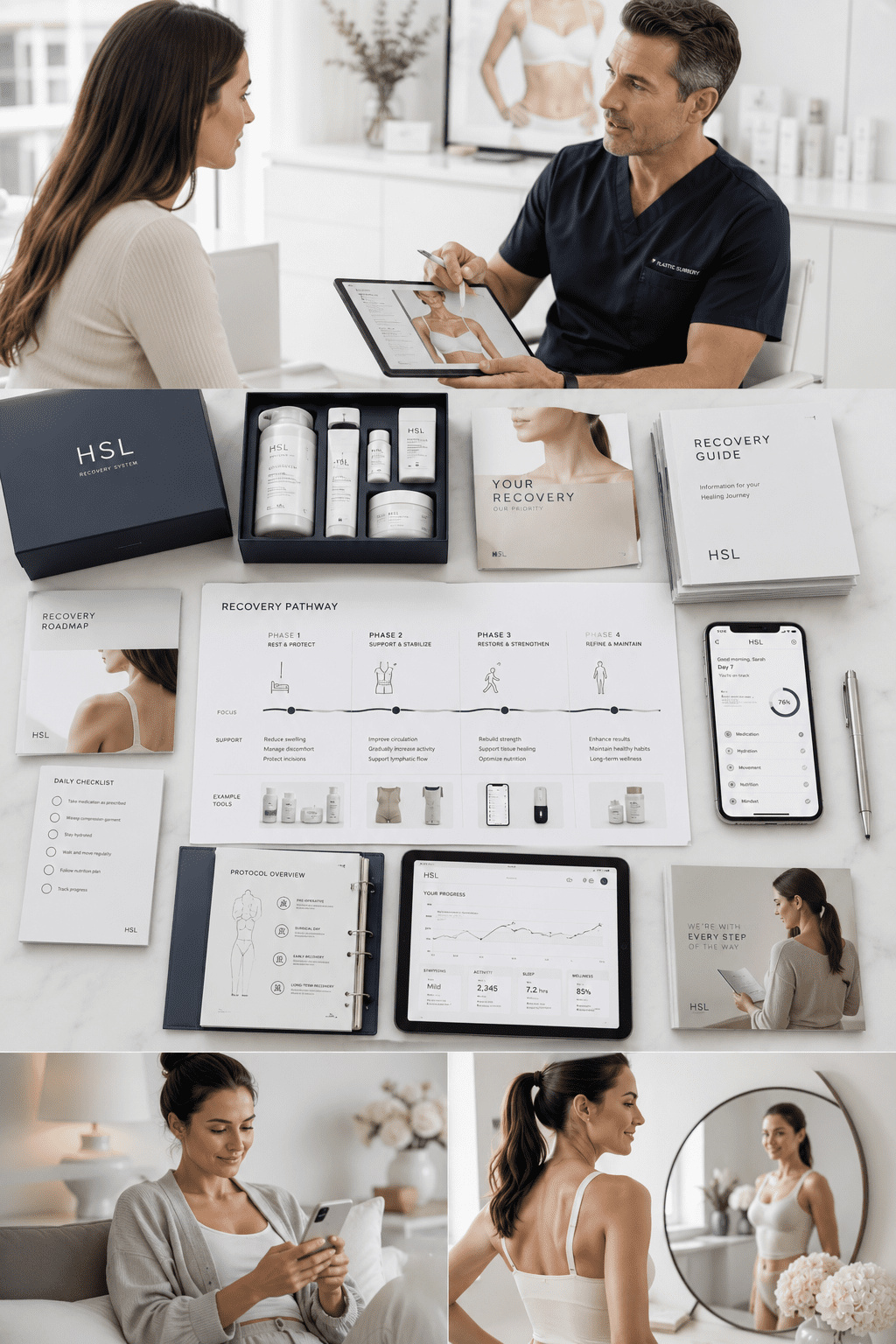
portfolio
The HSL LABS portfolio encompasses a growing collection of programs, protocols, technologies, educational resources, and recovery-focused products developed to support the post-procedural patient journey. Each initiative is designed to address specific aspects of recovery, healing, patient engagement, and outcome optimization through a structured and physician-informed framework.
The Company’s development philosophy emphasizes alignment with the biological processes and phases that govern tissue repair and recovery. As a result, portfolio initiatives are organized around specifically defined recovery objectives, procedural categories, patient needs, and healing phases rather than broad, generalized health and wellness concepts. This approach allows for greater precision in design, implementation, evaluation, and ongoing refinement.
Portfolio development is guided by contemporary scientific understanding, clinical insight, operational practicality, and continuous observational learning. Programs, protocols, technologies, and products are intended to function as complementary components within a broader recovery blueprint that supports physicians, patients, and clinical practices throughout the recovery continuum.
As recovery science continues to evolve, the HSL LABS portfolio is designed with the inherent flexibility to evolve with it. Through ongoing innovation, evaluation, and physician-informed development, the Company is enriching and expanding the range of solutions available to address the diverse challenges and opportunities associated with post-procedural healing, recovery management, and long-term outcome support to the benefit of physician practices and the patients under their care.
Coordinating Recovery Through Structured Programs
HSL LABS develops recovery-focused programs designed to bring physician guidance, protocols, education, communication, technology, monitoring, and support resources together within a coordinated and mutually-enhancing framework. Rather than viewing recovery as a collection of isolated interventions, the Company approaches recovery through integrated programs that help promote greater consistency, continuity, and engagement throughout the patient experience.
By combining multiple recovery-support components within a single organizational structure, HSL LABS creates scalable frameworks that support both physicians and patients across a wide range of procedural and recovery-focused issues and applications.
By fostering collaboration, innovation, and practical implementation, HSL LABS strives to contribute to a future where recovery is viewed not as a period that follows treatment, but as an integral component of treatment itself.
By combining clinical insight, scientific knowledge, and practical implementation, HSL LABS works to advance recovery – in itself an emerging science and field of endeavor – as a more clearly structured and integrated component of modern healthcare.
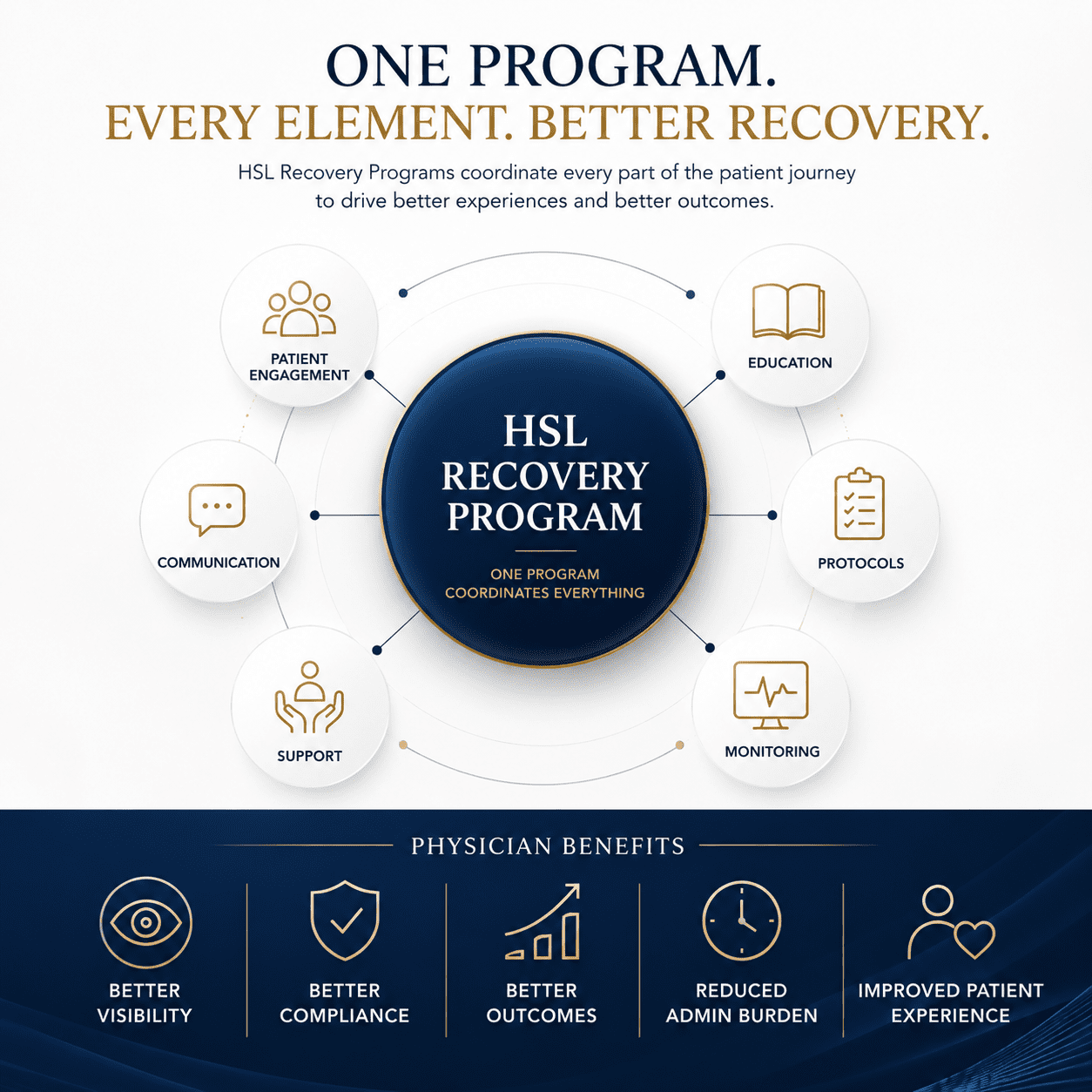
Coordinating Recovery Through Structured Programs
HSL LABS develops recovery-focused programs designed to bring physician guidance, protocols, education, communication, technology, monitoring, and support resources together within a coordinated and mutually-enhancing framework. Rather than viewing recovery as a collection of isolated interventions, the Company approaches recovery through integrated programs that help promote greater consistency, continuity, and engagement throughout the patient experience.
By combining multiple recovery-support components within a single organizational structure, HSL LABS creates scalable frameworks that support both physicians and patients across a wide range of procedural and recovery-focused issues and applications.
By fostering collaboration, innovation, and practical implementation, HSL LABS strives to contribute to a future where recovery is viewed not as a period that follows treatment, but as an integral component of treatment itself.
By combining clinical insight, scientific knowledge, and practical implementation, HSL LABS works to advance recovery – in itself an emerging science and field of endeavor – as a more clearly structured and integrated component of modern healthcare.
PROGRAMS
HSL LABS approaches recovery through structured programs rather than isolated products or individual interventions. The Company believes that successful recovery is influenced by multiple interrelated factors, including patient preparation, physician guidance, protocol adherence, patient education and expectation management, open communication, monitoring, and recovery-support resources. As a result, HSL LABS develops integrated programs designed to bring these elements together within a tightly coordinated framework.
A program represents the highest organizational level within the HSL LABS portfolio. Each program is designed to address a specific recovery objective, patient population, procedural category, or clinical need. Programs may incorporate one or more protocols, supporting technologies, educational resources, patient engagement tools, monitoring systems, and specialized products working together toward a common treatment objective.
This model reflects the Company’s belief that recovery outcomes are rarely influenced by any single factor alone. Effective recovery often depends upon the interaction of multiple variables occurring before, during, and after a procedure. By organizing these variables within a structured program, HSL LABS promotes greater consistency, continuity, and coordination throughout the patient experience.
Programs are designed to operate within physician-guided environments and may be adapted to reflect the needs of different specialties, procedures, patient profiles, and recovery goals. Depending upon the nature of the initiative, a program may encompass patient education materials, communication systems, enrollment processes, recovery tracking tools, workflow integration resources, support services, and other components intended to facilitate faithful implementation and compliant participation.
Technology also plays an important role in supporting program administration. Through platforms such as PhysicianOS™, participating physicians and practices may access resources designed to assist with program management, communication, documentation, workflow coordination, and related operational activities. These technological capabilities help support consistency while streamlining management and reducing administrative complexity. They also serve to accommodate long-term program evolution.
An important characteristic of the HSL LABS approach is that programs are never viewed as static constructs. As new information becomes available and implementation experience and relevant data accumulates, programs may be refined, expanded, or enhanced through ongoing evaluation and physician-informed feedback. This process allows initiatives to evolve over time while remaining aligned with clinical realities, operational considerations, and organizational objectives.
Current and future HSL LABS programs will be designed to efficiently address a wide range of recovery-focused needs, including post-surgical healing support, minimally invasive aesthetic recovery, patient engagement, peri-procedural readiness, recovery monitoring, educational initiatives, and other physician-guided applications. While individual protocols and products may change over time, the Company’s broader objective remains consistent: The development of organized recovery frameworks that help support physicians and patients throughout the post-procedural experience.
By viewing recovery through the lens of comprehensive programs rather than isolated interventions, HSL LABS actively creates solutions that are scalable, adaptable, and capable of addressing the complex realities of modern procedural care.
Structured Recovery. Guided By Phase.
HSL LABS continuously develops specific recovery protocols designed to support patients through each of the distinct physiological phases of healing. Recognizing that recovery needs evolve over post-operative time and vary across procedures, protocols are structured to help coordinate education, patient engagement, monitoring, communication, and recovery-support measures in a manner aligned with changing clinical and patient requirements.
Rather than applying a one-size-fits-all approach, HSL LABS protocols are designed as adaptable frameworks that support independent physician medical judgment while promoting consistency, organization, and continuity throughout the entirety of each patient’s recovery.
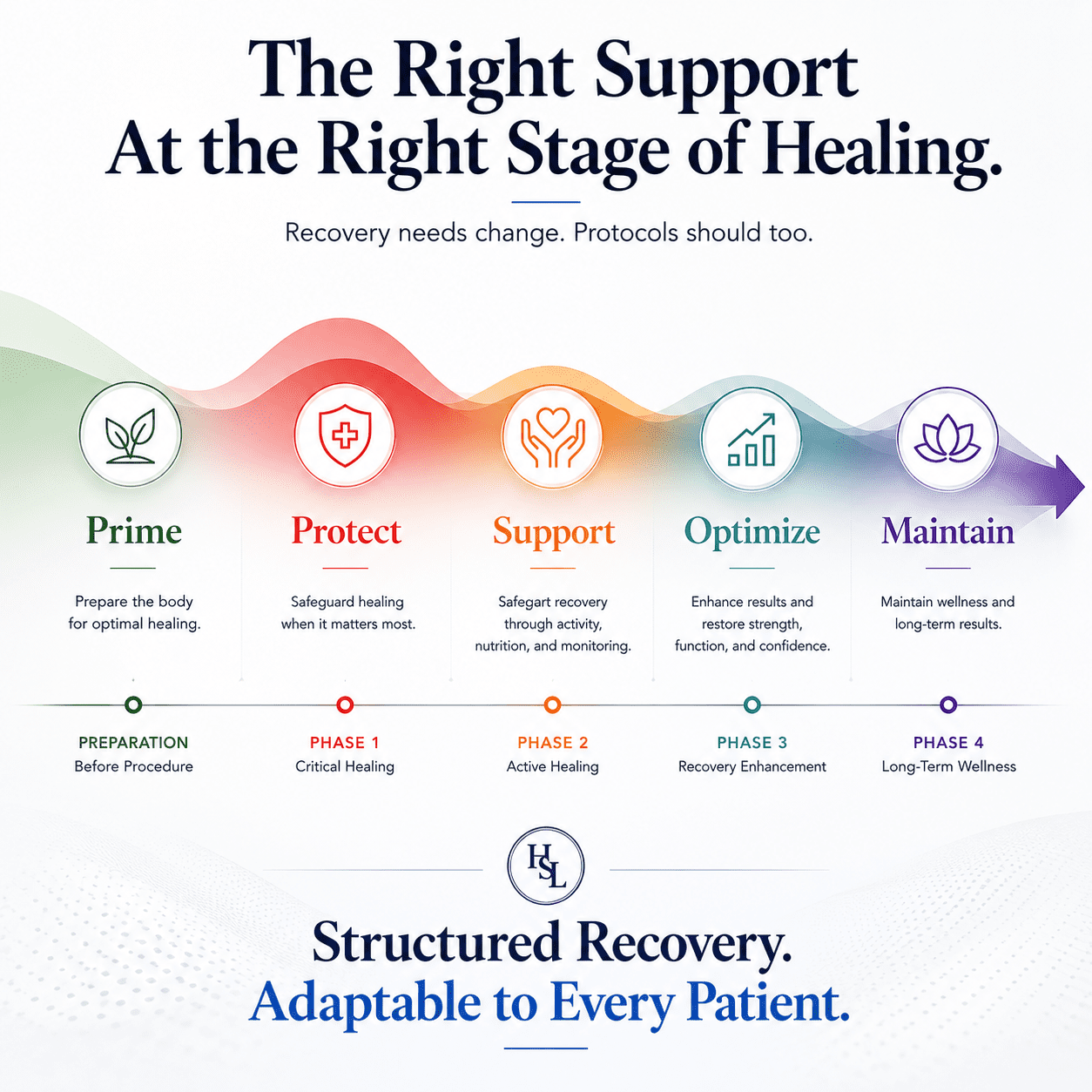
Structured Recovery. Guided By Phase.
HSL LABS continuously develops specific recovery protocols designed to support patients through each of the distinct physiological phases of healing. Recognizing that recovery needs evolve over post-operative time and vary across procedures, protocols are structured to help coordinate education, patient engagement, monitoring, communication, and recovery-support measures in a manner aligned with changing clinical and patient requirements.
Rather than applying a one-size-fits-all approach, HSL LABS protocols are designed as adaptable frameworks that support independent physician medical judgment while promoting consistency, organization, and continuity throughout the entirety of each patient’s recovery.
PROTOCOLS
HSL LABS develops structured recovery protocols designed to provide organized, physician-guided frameworks for supporting patients throughout the post-procedural experience. These protocols are intended to assist in coordinating and efficiently bringing together recovery-related activities, educational resources, patient engagement strategies, monitoring processes, and recovery-support interventions in a truly comprehensive manner that reflects the biological and practical realities of healing.
Unlike generalized recovery recommendations, HSL LABS protocols are designed around the principle that recovery occurs in distinct and evolving phases. The physiological demands of the immediate post-procedural period differ substantially from those encountered during subsequent stages of tissue repair, remodeling, and maturation. Accordingly, protocol design emphasizes the sequencing of recovery-support measures in a manner intended to align with changing patient needs over time in full coordination with proven physiology.
The Company further recognizes that recovery requirements may vary considerably among different procedural categories. A patient recovering from an extensive reconstructive procedure may face challenges that differ significantly from those associated with minimally invasive aesthetic treatments. Similarly, the recovery considerations associated with facial surgery may differ from those encountered following breast, body contouring, hand, craniofacial, or other reconstructive procedures. As a result, HSL LABS approaches protocol development with an emphasis on customized procedural specificity rather than uniform application.
This philosophy extends to the recognition that no two patients are identical. Individual health status, age, nutritional considerations, medical history, treatment objectives, healing characteristics, procedural complexity, and physician preferences may all influence recovery planning. For this reason, HSL LABS protocols are intended to function as structured frameworks that support professional medical judgment rather than replace it. Treating physicians always retain full discretion regarding the appropriateness, modification, implementation, or adaptation of any protocol element based upon the needs of individual patients and specific clinical circumstances. The objective of any protocol is to support the physician’s best clinical judgment in every circumstance, but never to replace or inhibit it.
Protocol development incorporates input from physician advisors, implementation observations, evolving scientific literature, operational considerations, and patient experience trends. Through this process, HSL LABS creates methodologies that are both clinically informed and practically deployable within real-world healthcare environments. The objective is not merely standardization for its own sake, but the creation of frameworks that promote consistency while preserving flexibility where individualized decision-making is appropriate.
Many HSL LABS protocols are designed to integrate with broader program structures and may incorporate educational resources, communication systems, patient engagement tools, recovery-support products, monitoring processes, and technology-enabled workflow components. This integrated approach allows protocols to function as operational roadmaps that help coordinate multiple aspects of the recovery experience within a unified framework.
As understanding of recovery science continues to evolve, protocols remain subject to ongoing evaluation and continuous refinement. New clinical insights, implementation experiences, technological capabilities, and physician feedback may contribute to protocol modification, expansion, or enhancement over time. This commitment to continuous improvement reflects the Company’s belief that recovery methodologies should evolve alongside advances in scientific knowledge and clinical practice.
Through its protocol development initiatives, HSL LABS provides physicians with practical, adaptable, and recovery-focused frameworks capable of supporting a wide range of procedures, patient populations, and clinical objectives while recognizing and conforming to the individualized and often complex nature of the healing process.
PURPOSE-BUILT PRODUCTS FOR BETTER RECOVERY
HSL LABS develops physician-informed products designed to support specific needs that arise throughout the recovery journey. From procedural preparation and nutritional readiness to healing support, scar optimization, compression technologies, patient engagement, and long-term recovery care, each clinical-grade product is developed with a practical objective in mind.
Recovery often involves multiple factors that extend beyond the procedure itself. Patient preparedness, tissue support, scar appearance, swelling management, recovery adherence, physical support, and long-term healing considerations may all influence the overall recovery trajectory. Recognizing these diverse needs, HSL LABS approaches product development with an emphasis on practical utility, physician relevance, and integration within real-world, real-time clinical recovery environments.
Rather than relying on generalized or generic solutions, HSL LABS focuses on creating purpose-driven products that align with specificity on the evolving needs of recovery and integrate within broader physician-guided programs, protocols, and recovery-support frameworks. Many products are designed to support very specific recovery objectives or stages of healing, with the understanding that recovery requirements will change over time and will benefit from targeted rather than generalized approaches.
Through ongoing physician feedback, implementation experience, and evolving scientific understanding, HSL LABS is developing a growing and highly-specialized portfolio of recovery-focused solutions intended to support both physicians and patients throughout the post-procedural experience.
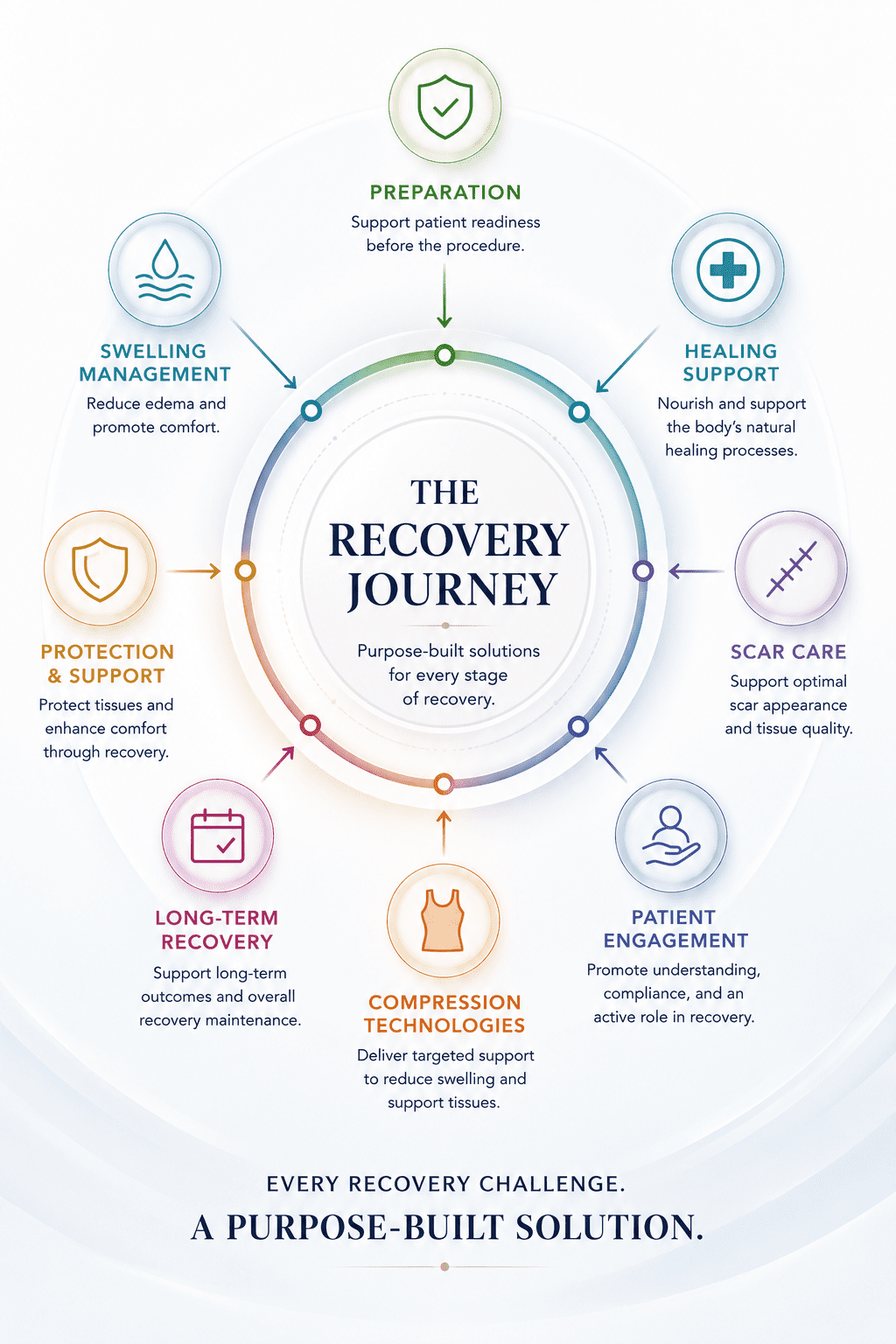
PURPOSE-BUILT PRODUCTS FOR BETTER RECOVERY
HSL LABS develops physician-informed products designed to support specific needs that arise throughout the recovery journey. From procedural preparation and nutritional readiness to healing support, scar optimization, compression technologies, patient engagement, and long-term recovery care, each clinical-grade product is developed with a practical objective in mind.
Recovery often involves multiple factors that extend beyond the procedure itself. Patient preparedness, tissue support, scar appearance, swelling management, recovery adherence, physical support, and long-term healing considerations may all influence the overall recovery trajectory. Recognizing these diverse needs, HSL LABS approaches product development with an emphasis on practical utility, physician relevance, and integration within real-world, real-time clinical recovery environments.
Rather than relying on generalized or generic solutions, HSL LABS focuses on creating purpose-driven products that align with specificity on the evolving needs of recovery and integrate within broader physician-guided programs, protocols, and recovery-support frameworks. Many products are designed to support very specific recovery objectives or stages of healing, with the understanding that recovery requirements will change over time and will benefit from targeted rather than generalized approaches.
Through ongoing physician feedback, implementation experience, and evolving scientific understanding, HSL LABS is developing a growing and highly-specialized portfolio of recovery-focused solutions intended to support both physicians and patients throughout the post-procedural experience.
PRODUCTS
HSL LABS develops products that are designed to target specific aspects of the post-procedural experience. Rather than approaching recovery through generalized health and wellness concepts, the Company focuses on identifying distinct recovery-related needs and developing clinical-grade products intended to specifically address those needs within structured clinical and recovery-support environments.
The Company’s clinical product development efforts span multiple important categories of recovery support. While individual formulations, technologies, materials, and product lines may evolve over time, each is intended to contribute to a broader objective: Helping physicians and patients navigate the recovery process through practical, purpose-driven solutions.
One important and fast-growing area of focus involves pre- and peri-procedural readiness. Products within this category are designed to support patients before a procedure takes place, helping to promote nutritional preparedness, physiological resilience, and recovery readiness as part of a more comprehensive approach to procedural planning and patient preparation.
Additional product initiatives focus on post-surgical healing support. These products are intended to assist patients during various stages of recovery by supporting the physiological processes associated with tissue repair, recovery progression, and long-term healing. Because recovery requirements change over time, some products may be designed for specific phases of the healing process rather than for generalized use throughout the entire recovery period.
The Company also explores product categories directed toward edema and swelling management, bruising and hematoma support, and other common post-procedural concerns frequently encountered by recovering patients. These areas continue to represent important opportunities for physician-informed innovation, particularly within surgical and aesthetic recovery environments.
Scar appearance and tissue quality represent additional areas of ongoing interest. HSL LABS evaluates products intended to support scar optimization, tissue conditioning, skin appearance, and related recovery objectives that may influence long-term procedural outcomes and patient satisfaction. Such products may include nutritional, topical, mechanical, or technology-supported approaches depending upon the specific clinical objective being addressed.
Recognizing the importance of skin integrity and tissue protection during recovery, the Company also evaluates barrier-support products and related technologies designed to support the healing environment and complement physician-directed aftercare strategies. These initiatives may address both surgical and minimally invasive procedural applications.
Beyond biologically focused products, HSL LABS maintains an interest in technologies that support recovery monitoring, patient participation, communication, and protocol adherence. These initiatives reflect the Company’s belief that successful recovery often depends not only upon physiological factors, but also upon education, engagement, compliance, and continuity throughout the patient post-procedural experience.
The Company additionally explores compression technologies and other mechanical recovery-support solutions intended to complement procedural recovery pathways. Such products may play an important role in selected recovery environments where physical support, stabilization, protection, or tissue management objectives are relevant.
Minimally invasive aesthetic procedures represent another important area of product development activity. As demand for injectables, energy-based treatments, skin rejuvenation procedures, and other minimally invasive interventions continues to expand, HSL LABS evaluates needs and opportunities for products specifically tailored to the unique recovery characteristics associated with these in-office treatments.
Importantly, HSL LABS views product development as an ongoing process rather than as a fixed endpoint. Emerging scientific knowledge, physician feedback, implementation experience, patient observations, and technological advancements may all contribute to the refinement of existing products and the identification of new opportunities. Through this process, the Company seeks to develop a growing portfolio of recovery-focused solutions that support physicians, patients, and the evolving needs of modern procedural care.
Whether addressing procedural preparation, recovery support, scar appearance, patient engagement, compression technologies, minimally invasive aftercare, or other recovery-related objectives, HSL LABS remains focused on developing products that serve practical purposes within a broader physician-informed framework dedicated to supporting the post-procedural experience.
Continuous Innovation
HSL LABS views product development as an ongoing process rather than a fixed endpoint. Product concepts, formulations, delivery systems, materials, packaging configurations, and recovery-support technologies are continually evaluated through physician feedback, implementation experience, emerging scientific literature, and ongoing research initiatives.
The Company recognizes that recovery science continues to evolve and that new opportunities for improvement may emerge as clinical understanding expands. As a result, product development is approached as a dynamic process of refinement, assessment, and innovation rather than the creation of static solutions.
Many product initiatives undergo multiple stages of evaluation, review, and revision before broader implementation. This process may involve physician collaboration, formulation assessment, recovery pathway integration, packaging development, operational review, and ongoing refinement based upon real-world observations and feedback.
Through this commitment to continuous improvement, HSL LABS seeks to develop recovery-focused solutions that evolve alongside advances in clinical knowledge, physician experience, patient needs, and the changing landscape of procedural care.
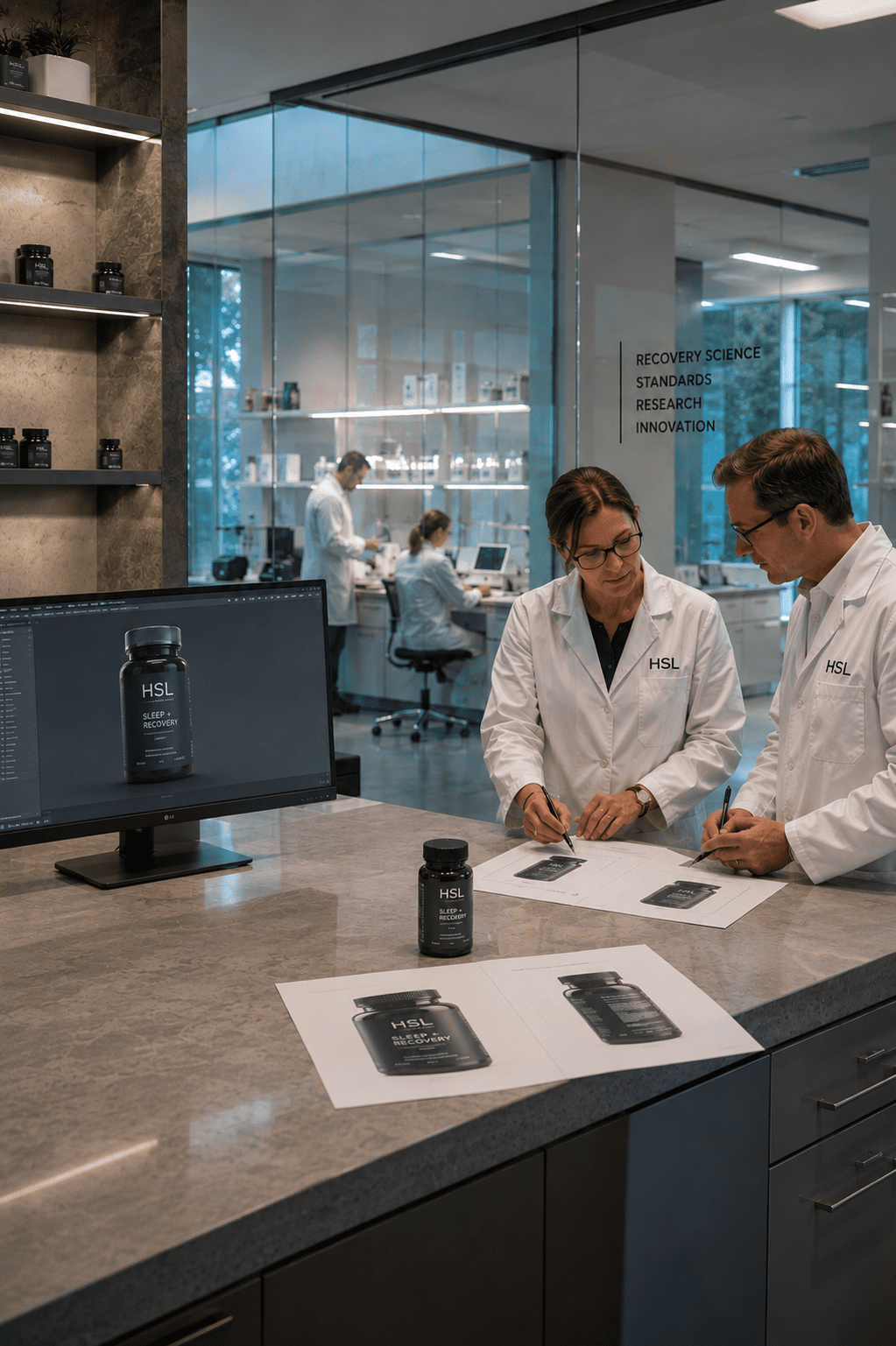
Continuous Innovation
HSL LABS views product development as an ongoing process rather than a fixed endpoint. Product concepts, formulations, delivery systems, materials, packaging configurations, and recovery-support technologies are continually evaluated through physician feedback, implementation experience, emerging scientific literature, and ongoing research initiatives.
The Company recognizes that recovery science continues to evolve and that new opportunities for improvement may emerge as clinical understanding expands. As a result, product development is approached as a dynamic process of refinement, assessment, and innovation rather than the creation of static solutions.
Many product initiatives undergo multiple stages of evaluation, review, and revision before broader implementation. This process may involve physician collaboration, formulation assessment, recovery pathway integration, packaging development, operational review, and ongoing refinement based upon real-world observations and feedback.
Through this commitment to continuous improvement, HSL LABS seeks to develop recovery-focused solutions that evolve alongside advances in clinical knowledge, physician experience, patient needs, and the changing landscape of procedural care.