

Technology Built Around Recovery
Most healthcare technology is designed to support scheduling, billing, documentation, and administrative workflows. While these functions are important, recovery often extends far beyond the procedure itself, requiring ongoing coordination, education, communication, visibility, and patient engagement over weeks and months. HSL LABS believes that recovery is not a single event, but a process that unfolds over time, creating the need for technology specifically designed to support the recovery journey and the many activities that occur throughout it.
The HSL LABS technology ecosystem was developed to help physicians, practices, and patients navigate recovery in a more structured, organized, and connected manner. Through recovery-focused operational tools, educational resources, patient engagement systems, reporting capabilities, communication frameworks, and physician visibility features, the platform is designed to support consistency, accountability, and informed decision-making throughout the recovery experience. At the center of this ecosystem is PhysicianOS™, the clinical operating system that helps coordinate and manage recovery-related activities before, during, and after procedural care.
Technology Built Around Recovery
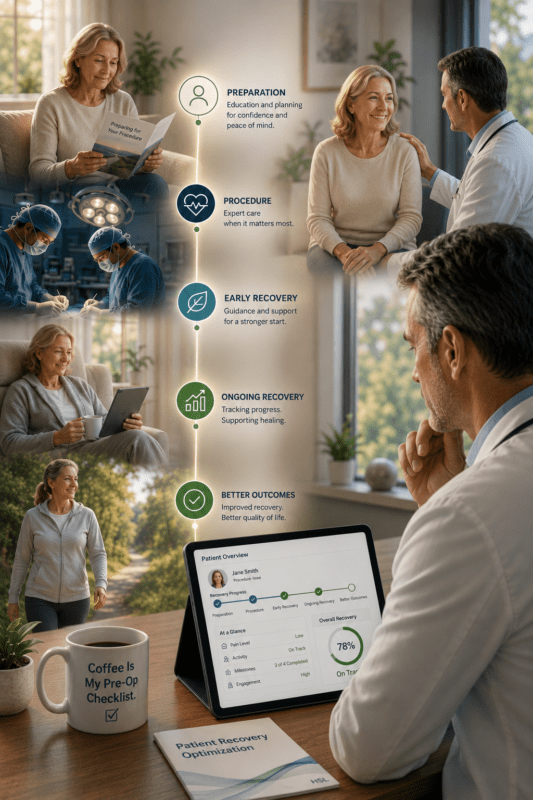
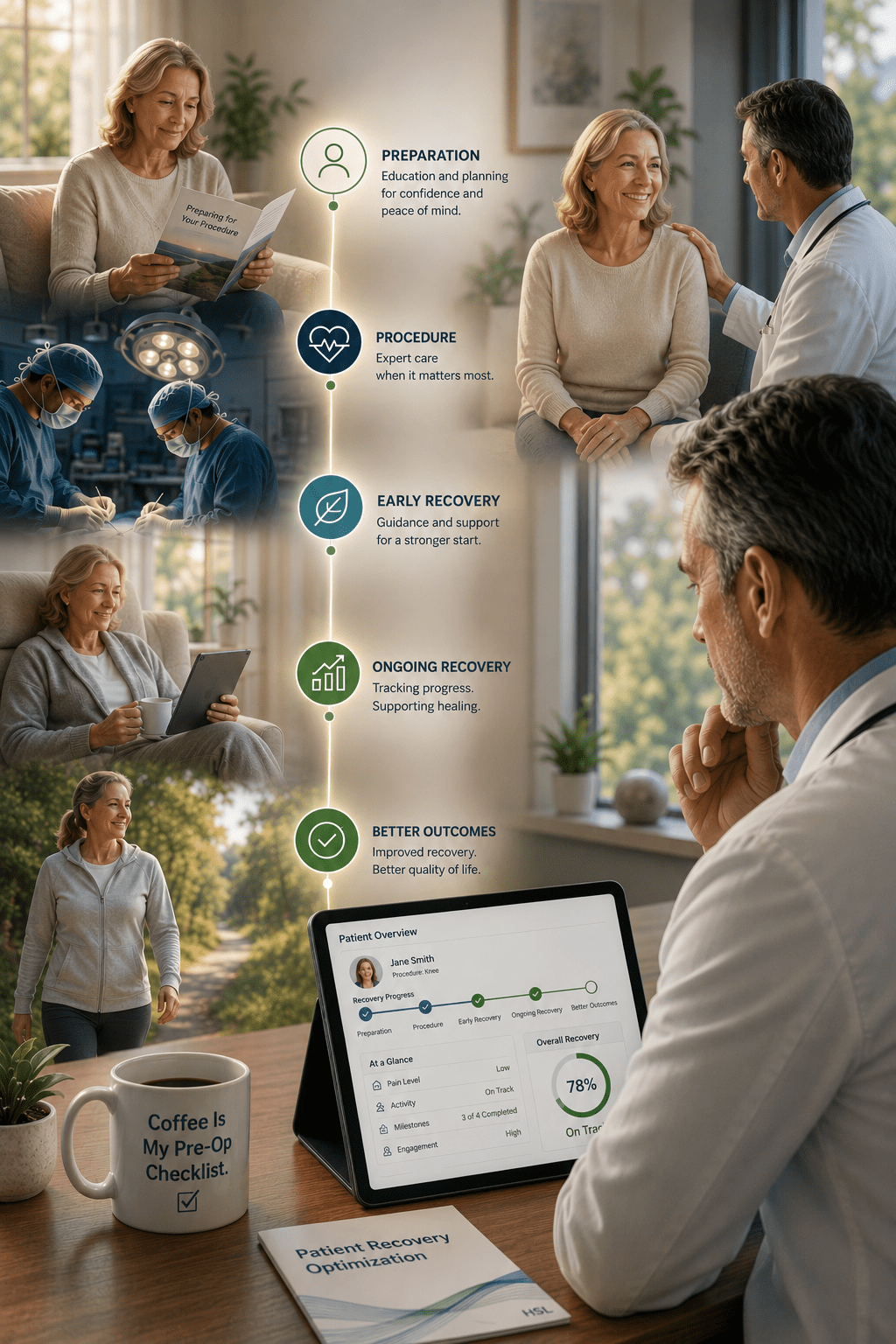
Most healthcare technology is designed to support scheduling, billing, documentation, and administrative workflows. While these functions are important, recovery often extends far beyond the procedure itself, requiring ongoing coordination, education, communication, visibility, and patient engagement over weeks and months. HSL LABS believes that recovery is not a single event, but a process that unfolds over time, creating the need for technology specifically designed to support the recovery journey and the many activities that occur throughout it.
The HSL LABS technology ecosystem was developed to help physicians, practices, and patients navigate recovery in a more structured, organized, and connected manner. Through recovery-focused operational tools, educational resources, patient engagement systems, reporting capabilities, communication frameworks, and physician visibility features, the platform is designed to support consistency, accountability, and informed decision-making throughout the recovery experience. At the center of this ecosystem is PhysicianOS™, the clinical operating system that helps coordinate and manage recovery-related activities before, during, and after procedural care.
PhysicianOS™ CLINICAL OPERATING SYSTEM
PhysicianOS™ is the unique proprietary clinical operating system developed by HSL LABS to support the administration, coordination, documentation, communication, and management of its recovery-focused programs, protocols, technologies, educational initiatives, and physician participation activities. Designed specifically for physician-guided procedural environments, the platform serves as the central operational infrastructure through which many organizational functions are organized and managed.
The development of PhysicianOS™ arose from the recognition that recovery-focused initiatives involve a substantial volume of information, documentation, communications, workflows, educational resources, protocol materials, reporting activities, and physician interactions. Managing these functions through disconnected systems can create inefficiencies, duplication of effort, version-control challenges, communication gaps, and administrative burdens. PhysicianOS™ was designed to address these issues through a unified and purpose-built operating environment.
At its core, PhysicianOS™ functions as a centralized platform through which participating physicians and authorized personnel may access program resources, protocol documentation, educational materials, training resources, operational guidance, administrative tools, reporting systems, and other approved content relevant to their participation in HSL LABS initiatives.
One of the platform’s principal responsibilities is protocol administration. Physicians and designated staff members may access current protocol versions, implementation guidance, procedural-specific materials, recovery-phase resources, revision histories, supporting documentation, and related information through a structured and centrally managed environment. This helps promote consistency while ensuring that users have access to current and approved materials.
PhysicianOS™ also supports communication and information distribution throughout the HSL LABS ecosystem. Organizational announcements, protocol updates, educational releases, committee communications, advisory notifications, implementation guidance, and other important information may be disseminated through the platform in a controlled and documented manner. This helps reduce fragmentation and ensures that participants receive information through a common communications channel.
The platform serves an important role within the Company’s governance framework. Materials associated with Internal Executive Briefings, Committee Review activities, Clinical Advisory Council initiatives, peer review processes, policy development efforts, and other organizational functions may be managed through PhysicianOS™. This capability supports documentation integrity, workflow continuity, accountability, and institutional recordkeeping.
Another significant function of the system involves operational coordination. Participating practices may utilize PhysicianOS™ to access implementation resources, administrative tools, support materials, educational content, reporting requirements, and program-management information. The objective is to simplify participation while reducing administrative complexity for physicians and their staff.
The platform is also intended to support organizational learning activities. Information generated through approved reporting initiatives, Designated Clinical Research and Data Facility participation, implementation observations, protocol evaluations, educational assessments, technology reviews, and other approved activities may be organized within the system to support review, analysis, and future decision-making. In this respect, PhysicianOS™ serves not only as an operational platform but also as a repository of institutional knowledge.
Technology development within PhysicianOS™ is guided by practical implementation requirements rather than theoretical software objectives. Enhancements are evaluated based upon physician feedback, workflow observations, operational experiences, organizational needs, and emerging opportunities identified through the Company’s governance and review processes. This approach helps ensure that platform evolution remains aligned with the realities of clinical practice and organizational operations.
Privacy, security, access control, and information governance are important considerations within the design and administration of PhysicianOS™. The system is intended to support responsible information management through role-based access controls, administrative oversight, documentation standards, audit capabilities, and other safeguards appropriate to the platform’s operational objectives.
As HSL LABS continues to expand, PhysicianOS™ is expected to serve as an increasingly important component of the Company’s technological infrastructure. Future capabilities may include enhanced workflow management tools, expanded reporting resources, educational delivery systems, communication features, data-management capabilities, and additional functionality designed to support physicians, participating practices, advisory participants, and organizational leadership.
Ultimately, PhysicianOS™ is more than a software application. It is the operational framework through which many of the Company’s programs, protocols, communications, governance activities, educational initiatives, and physician participation efforts are coordinated. By bringing these functions together within a unified environment, the platform helps support consistency, accountability, efficiency, and long-term organizational growth across the HSL LABS ecosystem.