

Building Centers of Recovery Excellence
Advancing post-procedure recovery requires more than the efforts of individual physicians. Meaningful progress is strengthened when physician practices, surgical facilities, recovery-focused organizations, and healthcare teams actively participate in education, research, protocol development, technology evaluation, and organizational learning. Clinical designation programs are intended to recognize organizations that demonstrate a commitment to these broader efforts and contribute to the continued advancement of recovery-focused care.
Unlike professional certifications, which acknowledge the achievements and qualifications of individual healthcare professionals, clinical designations recognize institutional engagement and organizational participation. Designated facilities serve as important environments where recovery methodologies can be observed, evaluated, refined, and strengthened through real-world implementation. Their contributions help bridge the gap between theoretical concepts and practical clinical experience, ensuring that future initiatives remain grounded in physician-directed care and everyday patient realities.
Participating facilities also play an important role in fostering collaboration across the recovery ecosystem. Through educational initiatives, observational programs, protocol assessments, advisory activities, technology evaluations, and professional engagement opportunities, designated organizations contribute to a growing body of knowledge that benefits physicians, healthcare professionals, patients, and participating practices alike. By supporting continuous learning and organizational improvement, these facilities help strengthen the foundation upon which future recovery innovations, standards, and educational programs are built.
Building Centers of Recovery Excellence
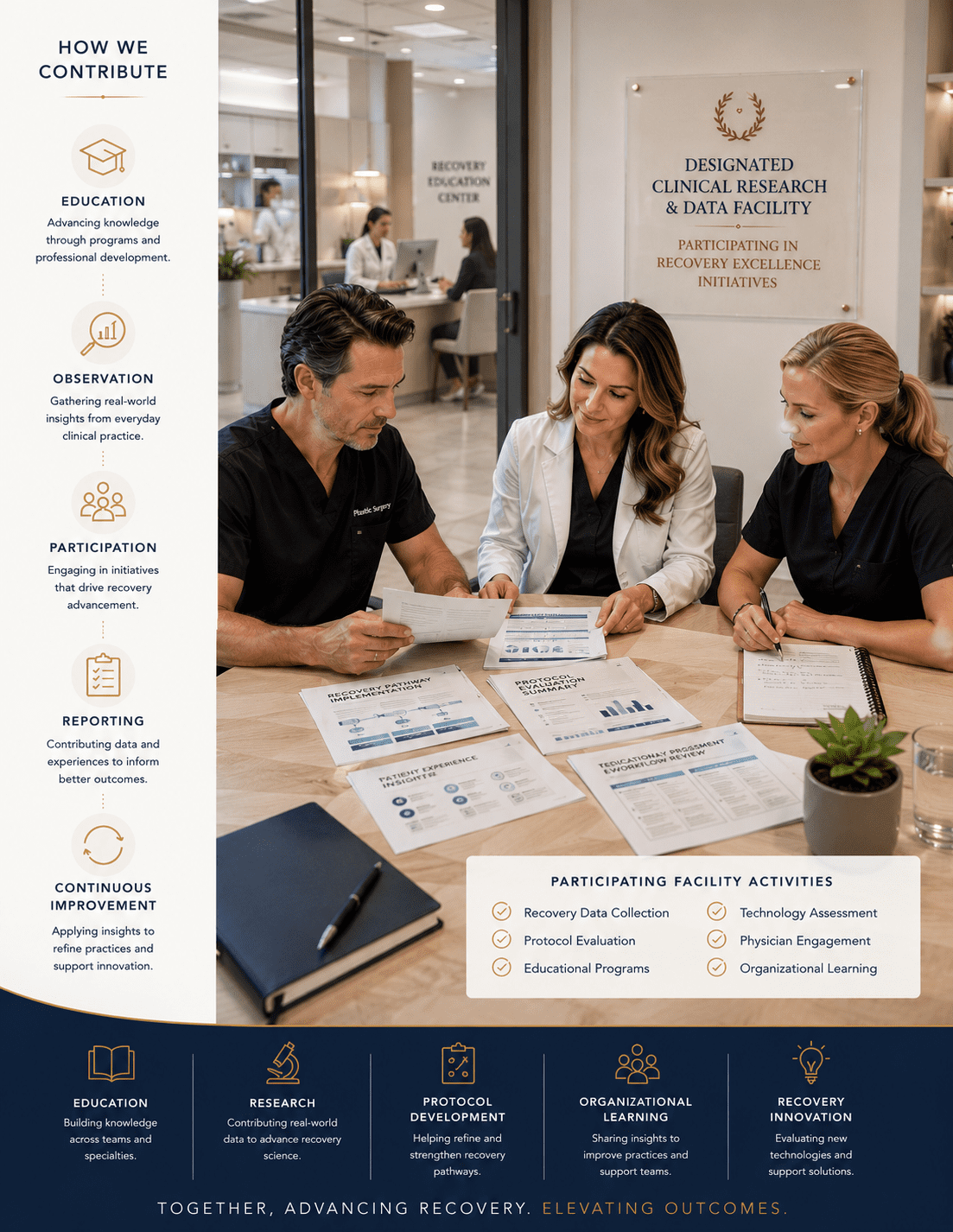
Advancing post-procedure recovery requires more than the efforts of individual physicians. Meaningful progress is strengthened when physician practices, surgical facilities, recovery-focused organizations, and healthcare teams actively participate in education, research, protocol development, technology evaluation, and organizational learning. Clinical designation programs are intended to recognize organizations that demonstrate a commitment to these broader efforts and contribute to the continued advancement of recovery-focused care.
Unlike professional certifications, which acknowledge the achievements and qualifications of individual healthcare professionals, clinical designations recognize institutional engagement and organizational participation. Designated facilities serve as important environments where recovery methodologies can be observed, evaluated, refined, and strengthened through real-world implementation. Their contributions help bridge the gap between theoretical concepts and practical clinical experience, ensuring that future initiatives remain grounded in physician-directed care and everyday patient realities.
Participating facilities also play an important role in fostering collaboration across the recovery ecosystem. Through educational initiatives, observational programs, protocol assessments, advisory activities, technology evaluations, and professional engagement opportunities, designated organizations contribute to a growing body of knowledge that benefits physicians, healthcare professionals, patients, and participating practices alike. By supporting continuous learning and organizational improvement, these facilities help strengthen the foundation upon which future recovery innovations, standards, and educational programs are built.
CLINICAL DESIGNATIONS
HSL LABS believes that advancing the science and practice of post-procedure recovery requires more than individual professional achievement. It also requires the active participation of physician practices, surgical facilities, recovery-focused clinical environments, and other organizations committed to supporting education, research, innovation, protocol development, and organizational learning.
For this reason, HSL LABS supports the development of clinical designation programs intended to recognize participating practices and facilities that demonstrate meaningful engagement in recovery-focused initiatives and contribute to the advancement of post-procedural recovery as an emerging area of professional focus.
Unlike professional certifications, which recognize the qualifications and accomplishments of individual physicians and healthcare professionals, clinical designations recognize organizational participation, institutional commitment, and ongoing contributions to recovery-related activities.
Designated organizations may participate in a variety of educational, research, observational, technology-evaluation, protocol-development, and organizational-learning initiatives. Such participation helps strengthen the connection between real-world clinical practice and the ongoing development of programs, protocols, technologies, educational resources, and recovery-support methodologies.
One important example is the Designated Clinical Research and Data Facility Program. Participating facilities within this program may contribute observational information, implementation experiences, recovery-related data, protocol assessments, workflow observations, educational evaluations, and other approved forms of reporting that support organizational learning and future development efforts.
These facilities play an important role in helping HSL LABS better understand recovery experiences across diverse procedural categories and clinical environments. By contributing information derived from actual patient-care settings, participating facilities help ensure that future organizational initiatives remain informed by practical experience and physician-directed clinical realities.
Clinical designations may also recognize participation in educational initiatives, physician-development programs, advisory activities, protocol evaluations, technology assessments, professional discussions, and other organizational efforts intended to advance the field of post-procedure recovery.
Designation standards may include factors such as physician participation, professional certifications, educational engagement, protocol utilization, reporting activities, organizational cooperation, ethical conduct, commitment to patient-centered recovery principles, and ongoing involvement in approved initiatives. Specific designation criteria may vary according to the nature and objectives of a particular program.
The Company believes that designated facilities can serve as valuable centers of learning, collaboration, and professional engagement. Through their participation, these organizations contribute to the exchange of knowledge, the evaluation of emerging methodologies, the refinement of recovery-support practices, and the continued development of educational and professional standards.
Clinical designations may additionally provide opportunities for greater collaboration among participating physicians, healthcare professionals, researchers, educators, advisors, and organizational leaders. These relationships help foster the exchange of ideas while creating structured pathways through which observations, experiences, and recommendations may contribute to broader organizational initiatives.
Importantly, designation is not intended to represent endorsement of a particular physician, treatment, procedure, or clinical outcome. Rather, it reflects participation in defined educational, research, observational, and organizational activities associated with the advancement of post-procedure recovery and healing.
As HSL LABS and its affiliated initiatives continue to evolve, clinical designation programs are expected to play an increasingly important role in supporting physician engagement, organizational learning, educational advancement, protocol development, and recovery-focused innovation.
Ultimately, clinical designations recognize organizations that choose to contribute to something larger than their own individual practice activities. By participating in research, education, professional development, protocol refinement, and organizational learning initiatives, designated facilities help strengthen the collective knowledge base that supports the continued advancement of post-procedure recovery.