


Quality Through Process, Oversight, and Continuous Improvement
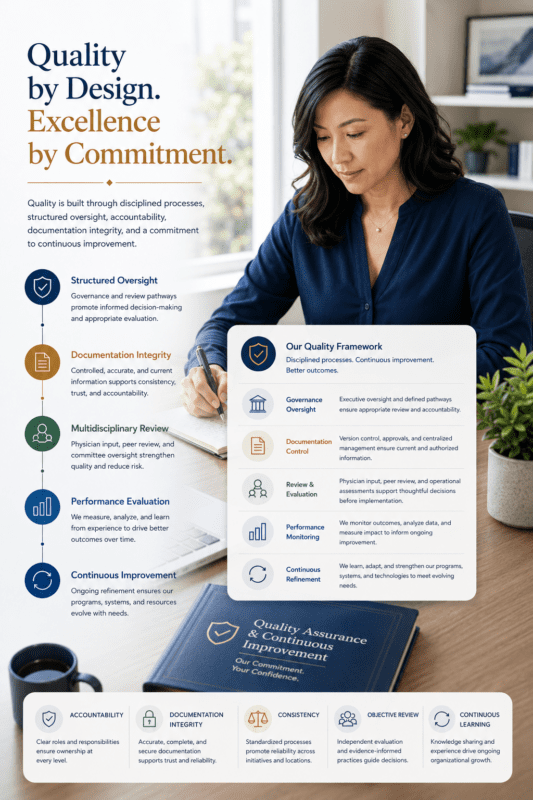
Quality is not achieved through a single review, final approval, or isolated checkpoint. It is built through disciplined processes, structured oversight, accountability, documentation integrity, and a commitment to continuous improvement. At HSL LABS, quality principles are integrated throughout the organization to help ensure that programs, protocols, technologies, educational initiatives, operational systems, and products are developed, evaluated, and refined through a thoughtful and consistent framework.
The Company’s quality philosophy begins with the belief that meaningful outcomes require structure. New initiatives are expected to progress through defined review pathways that may include physician input, executive evaluation, committee review, peer review activities, operational assessments, and ongoing governance oversight. These processes are designed to promote informed decision-making, reduce reliance on informal practices, and help ensure that important initiatives receive appropriate evaluation before implementation.
Quality assurance is viewed as an ongoing organizational responsibility rather than a final step in development. Through documentation controls, performance evaluation, multidisciplinary review, continuous learning, and structured improvement processes, HSL LABS seeks to create an environment where quality is continuously monitored, measured, and strengthened. This commitment supports operational consistency, promotes accountability, and helps ensure that the standards expected by physicians, participating practices, patients, and organizational leadership remain at the center of every initiative.
Quality Through Process, Oversight, and Continuous Improvement
Quality is not achieved through a single review, final approval, or isolated checkpoint. It is built through disciplined processes, structured oversight, accountability, documentation integrity, and a commitment to continuous improvement. At HSL LABS, quality principles are integrated throughout the organization to help ensure that programs, protocols, technologies, educational initiatives, operational systems, and products are developed, evaluated, and refined through a thoughtful and consistent framework.
The Company’s quality philosophy begins with the belief that meaningful outcomes require structure. New initiatives are expected to progress through defined review pathways that may include physician input, executive evaluation, committee review, peer review activities, operational assessments, and ongoing governance oversight. These processes are designed to promote informed decision-making, reduce reliance on informal practices, and help ensure that important initiatives receive appropriate evaluation before implementation.
Quality assurance is viewed as an ongoing organizational responsibility rather than a final step in development. Through documentation controls, performance evaluation, multidisciplinary review, continuous learning, and structured improvement processes, HSL LABS seeks to create an environment where quality is continuously monitored, measured, and strengthened. This commitment supports operational consistency, promotes accountability, and helps ensure that the standards expected by physicians, participating practices, patients, and organizational leadership remain at the center of every initiative.
QUALITY CONTROL AND ASSURANCE
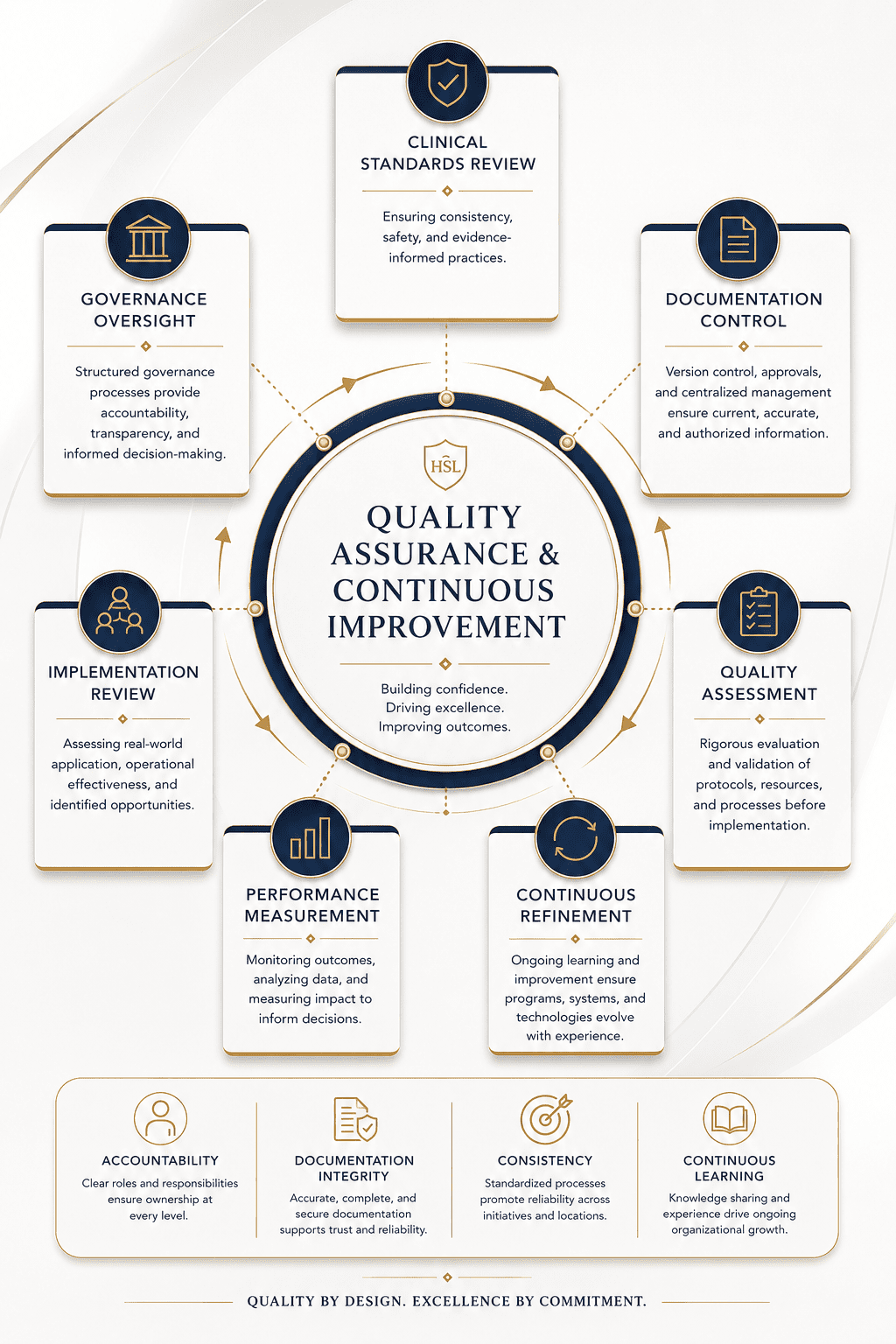
HSL LABS recognizes that quality is not achieved through isolated reviews or periodic inspections. Rather, quality is the product of disciplined processes, consistent oversight, structured evaluation, documentation integrity, accountability, and continuous refinement. For this reason, quality control and assurance principles are integrated throughout the Company’s programs, protocols, technologies, educational initiatives, governance activities, operational systems, and product-development efforts.
The Company’s approach to quality begins with process design. New initiatives are expected to progress through defined review pathways that may include physician input, Internal Executive Briefings, Committee Review activities, peer review evaluations, Clinical Advisory Council participation, operational assessments, and executive oversight. These mechanisms are intended to promote thoughtful evaluation before implementation and to reduce reliance upon informal or ad hoc decision-making.
Documentation control represents an important component of the quality framework. Protocols, educational resources, operational procedures, policy documents, implementation materials, technology specifications, reporting methodologies, and related organizational assets are expected to be managed through structured review, approval, revision, and version-control processes. These practices help promote consistency while ensuring that participants have access to current and authorized information.
Quality assurance activities also extend to protocol governance. Recovery methodologies, implementation procedures, educational resources, and related program components may be periodically evaluated to determine whether modifications, clarifications, updates, or enhancements are warranted. Such evaluations may be informed by physician observations, implementation experiences, organizational learning activities, committee recommendations, peer review findings, and other approved review mechanisms.
Technology systems are similarly subject to quality-oriented evaluation processes. PhysicianOS™, physician dashboards, patient portals, reporting systems, communication tools, and related infrastructure may undergo ongoing review to identify opportunities for enhanced functionality, improved usability, greater operational efficiency, and stronger alignment with physician and practice needs. Feedback from participating users serves as an important source of information in these efforts.
Educational initiatives also fall within the Company’s quality framework. Patient-facing materials, physician resources, training programs, implementation guidance, communication assets, and informational content may be reviewed for accuracy, clarity, consistency, relevance, and alignment with organizational objectives. This process helps ensure that educational resources remain useful, understandable, and responsive to evolving needs.
The Company places particular emphasis on continuous improvement. Quality assurance is not viewed as a final checkpoint occurring after development activities have concluded. Rather, it functions as an ongoing process through which programs, protocols, technologies, educational initiatives, operational systems, and products are periodically evaluated and refined based upon experience, observations, performance assessments, and emerging opportunities.
Organizational accountability represents another important element of the quality framework. Structured governance processes help establish responsibility for review activities, approvals, recommendations, modifications, and implementation decisions. By maintaining documented pathways for evaluation and oversight, the Company seeks to promote transparency, consistency, and informed decision-making throughout the organization.
The Internal Executive Briefing System plays a particularly important role within quality assurance activities. Through the IEB process, observations, recommendations, implementation concerns, technology enhancements, educational improvements, protocol modifications, and operational issues may be introduced for structured review and evaluation. This process helps ensure that quality-related observations are captured, documented, and considered within the broader organizational decision-making framework.
Committee Review and peer review activities provide additional layers of quality oversight. These mechanisms create opportunities for multidisciplinary evaluation, independent assessment, constructive challenge, and detailed examination of proposed initiatives and existing organizational activities. By encouraging review from multiple perspectives, the Company seeks to identify weaknesses, inconsistencies, implementation challenges, and opportunities for improvement before they become larger organizational issues.
The Company also recognizes the importance of measurement. Reporting systems, implementation observations, participation metrics, educational utilization data, technology performance indicators, and other operational information may contribute to the evaluation of organizational effectiveness and support future quality-improvement initiatives. These activities help transform quality assurance from a subjective objective into a measurable organizational function.
Ultimately, quality control and assurance at HSL LABS are intended to support a culture of disciplined execution, responsible oversight, continuous learning, and operational excellence. Through structured review processes, governance mechanisms, documentation controls, performance evaluation activities, and ongoing refinement efforts, the Company seeks to ensure that its programs, protocols, technologies, educational initiatives, operational systems, and products continue to reflect the standards expected by physicians, participating practices, patients, and organizational leadership.