

Advancing Recovery Knowledge
HSL LABS is committed to advancing the understanding of post-procedural recovery through ongoing investigation, analysis, and evaluation. While procedural techniques continue to evolve, many aspects of the recovery experience remain insufficiently understood, inconsistently measured, or fragmented across multiple disciplines. By examining recovery progression, patient engagement, adherence behaviors, educational effectiveness, physician workflows, and implementation practices, HSL LABS seeks to identify insights that may contribute to improved recovery support, more informed decision-making, and the development of future protocols, technologies, educational initiatives, and recovery-focused solutions.
The process begins with the identification of meaningful questions, observations, challenges, or emerging opportunities originating from physician collaboration, implementation experience, patient engagement activities, advisory discussions, technology observations, and broader developments within healthcare. These areas may then be explored through literature review, expert consultation, observational analysis, comparative evaluation, and other structured methods. Through a commitment to disciplined inquiry and longitudinal learning, HSL LABS seeks to better understand recurring patterns, emerging trends, and practical considerations that may influence patient experience, recovery quality, protocol effectiveness, and future innovation within recovery-focused care.
Advancing Recovery Knowledge
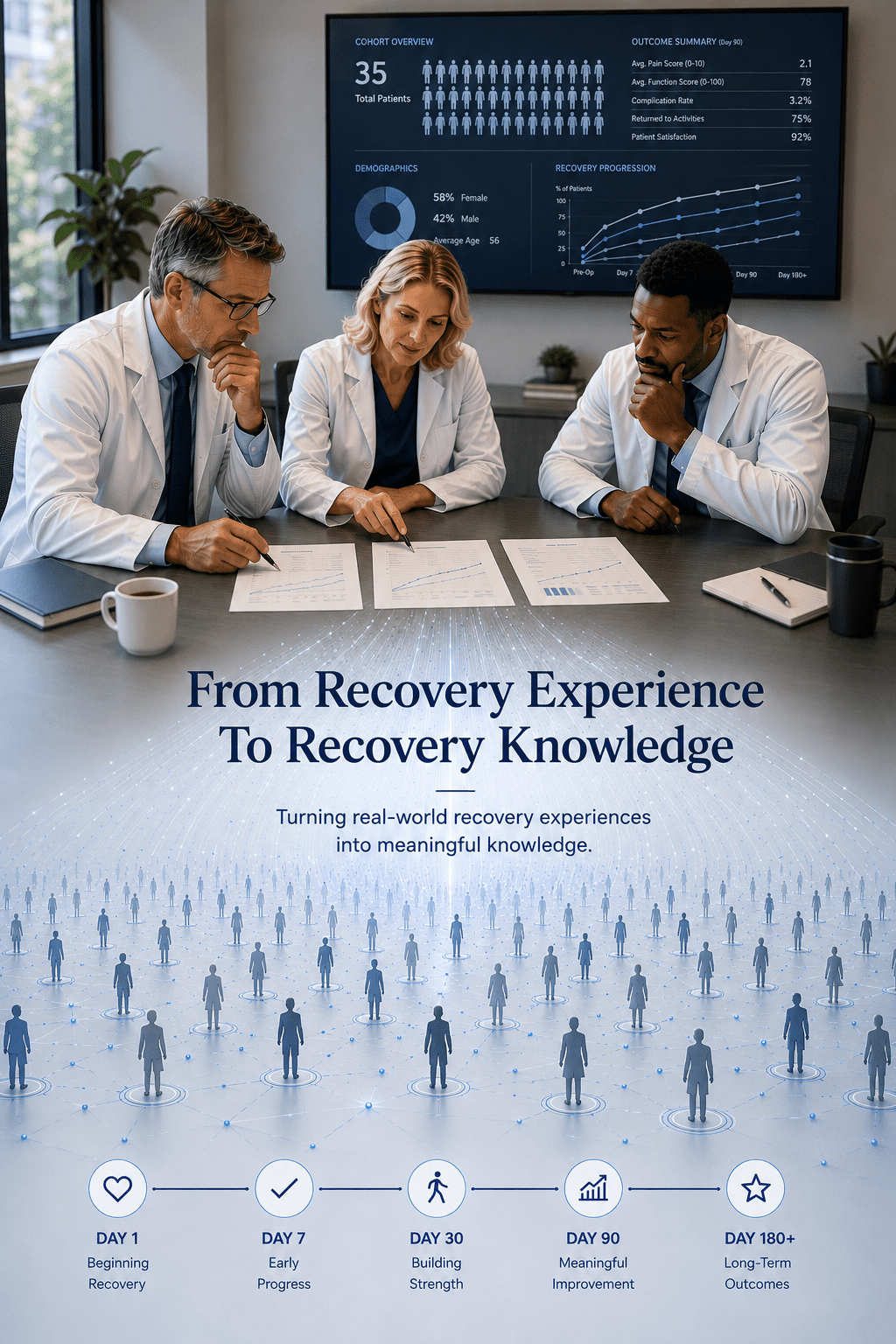
HSL LABS is committed to advancing the understanding of post-procedural recovery through ongoing investigation, analysis, and evaluation. While procedural techniques continue to evolve, many aspects of the recovery experience remain insufficiently understood, inconsistently measured, or fragmented across multiple disciplines. By examining recovery progression, patient engagement, adherence behaviors, educational effectiveness, physician workflows, and implementation practices, HSL LABS seeks to identify insights that may contribute to improved recovery support, more informed decision-making, and the development of future protocols, technologies, educational initiatives, and recovery-focused solutions.
The process begins with the identification of meaningful questions, observations, challenges, or emerging opportunities originating from physician collaboration, implementation experience, patient engagement activities, advisory discussions, technology observations, and broader developments within healthcare. These areas may then be explored through literature review, expert consultation, observational analysis, comparative evaluation, and other structured methods. Through a commitment to disciplined inquiry and longitudinal learning, HSL LABS seeks to better understand recurring patterns, emerging trends, and practical considerations that may influence patient experience, recovery quality, protocol effectiveness, and future innovation within recovery-focused care.
FURTHERING STUDIES
A central objective of HSL LABS is the continued expansion of knowledge relating to post-procedural recovery, healing support, patient engagement, and recovery-focused care. The Company recognizes that many aspects of the recovery experience remain insufficiently understood, inconsistently measured, or fragmented across multiple disciplines despite their importance to both physicians and patients.
Accordingly, HSL LABS maintains an ongoing interest in identifying and examining questions that may contribute to a deeper understanding of recovery-related processes, implementation practices, patient experiences, and support methodologies. These efforts are intended to inform future programs, protocols, technologies, educational initiatives, and product development activities.
Areas of study may include recovery progression patterns, patient adherence behaviors, procedural-specific recovery experiences, educational effectiveness, communication strategies, workflow integration, protocol implementation outcomes, recovery support interventions, and other factors that influence the post-procedural experience. The Company is particularly interested in issues that have practical relevance to physicians, patients, and clinical practices.
The process typically begins with the identification of a specific question, observation, trend, challenge, or opportunity. These may emerge from physician input, implementation experience, patient engagement activities, technological observations, advisory discussions, committee reviews, Internal Executive Briefings, or broader developments within healthcare and procedural medicine.
Once identified, issues may be subjected to structured investigation involving literature review, expert consultation, observational analysis, comparative evaluation, technology-supported information gathering, or other appropriate methods. The objective is not merely to accumulate information, but to develop useful insights that may contribute to more informed decision-making and future organizational initiatives.
Particular attention is often directed toward issues that have the potential to influence patient experience, recovery quality, protocol effectiveness, implementation efficiency, educational outcomes, or long-term organizational planning. Questions involving procedural recovery trends, physician workflow realities, communication challenges, technology utilization, and emerging recovery-support opportunities are among those that may receive focused attention.
The Company also recognizes the importance of longitudinal learning. Recovery-related insights frequently emerge over time rather than through isolated observations. By examining information across multiple procedural categories, patient populations, implementation environments, and timeframes, HSL LABS seeks to develop a broader understanding of recurring patterns and meaningful trends.
Importantly, furthering studies does not imply a predetermined outcome. Some investigations may support existing assumptions, while others may challenge them. In certain cases, findings may lead to protocol modifications, technology enhancements, educational initiatives, additional study, or the abandonment of previously held assumptions. The value of the process lies in disciplined inquiry rather than confirmation of expectations.
As HSL LABS continues to expand its activities, the Company remains committed to exploring questions that may contribute to a more informed understanding of recovery-focused care. Through ongoing investigation, analysis, and evaluation, these efforts support the Company’s broader objective of developing practical solutions grounded in observation, experience, and continuously evolving knowledge.